Last updated: April 11, 2026
Quick Answer: The Inspire Black Nitrile Gloves are 6 mil heavy-duty disposable gloves priced at $14.44 that offer chemical resistance, puncture protection, and a textured grip suitable for automotive work, medical tasks, cooking, and cleaning. They provide better durability than standard 4 mil gloves while maintaining decent tactile sensitivity for detailed work.
Key Takeaways
- 6 mil thickness provides enhanced puncture and tear resistance compared to standard disposable gloves
- Chemical-resistant nitrile construction protects against oils, greases, solvents, and automotive fluids
- Textured surface delivers reliable grip on tools, parts, and slippery surfaces
- Powder-free and latex-free design reduces allergic reactions and contamination
- Black color hides grease and grime, maintaining a professional appearance during use
- Priced at $14.44, offering reasonable value for heavy-duty disposable protection
- Suitable for automotive work, mechanical repairs, painting, cleaning, food prep, and medical tasks
- Available in multiple sizes to fit different hand dimensions
What Are Inspire Black Nitrile Gloves and Why Do They Matter for Automotive Work?
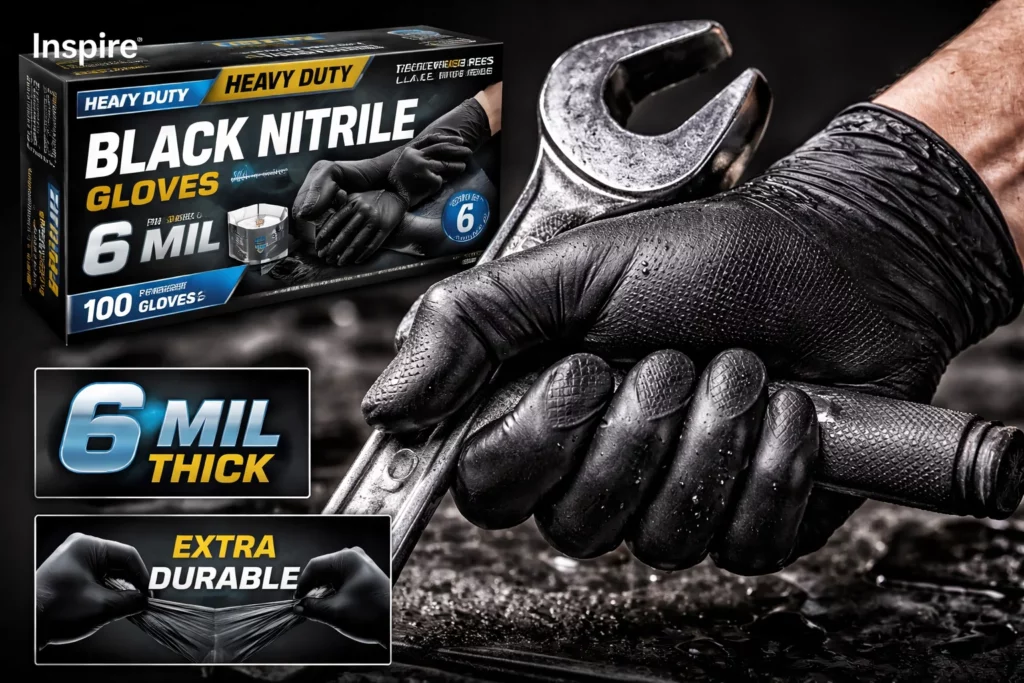
Inspire Black Nitrile Gloves are heavy-duty disposable gloves made from synthetic rubber (nitrile) at 6 mil thickness, designed specifically for tasks requiring both protection and dexterity. For anyone working on cars, motorcycles, or other machinery, these gloves solve a common problem: standard thin gloves tear too easily when handling sharp metal edges or rough parts, while thick work gloves sacrifice the finger sensitivity needed for detailed mechanical work.
The automotive environment presents unique challenges. You’re constantly exposed to motor oil, brake fluid, transmission fluid, gasoline, degreasers, and other chemicals that can irritate or damage skin. Sharp edges on metal parts, hot surfaces, and abrasive materials create additional hazards. Standard latex or vinyl gloves often fail within minutes of real automotive work, leaving you either working bare-handed (risking chemical exposure and cuts) or constantly changing gloves.
At $14.44 per box, these gloves position themselves in the mid-range category, offering more protection than bargain-bin options without the premium price of industrial-grade alternatives. The black color serves a practical purpose beyond aesthetics: it conceals oil stains and grease marks that would make lighter-colored gloves look filthy immediately, which matters if you’re working in a professional shop or dealing with customers.
Understanding the 6 Mil Thickness Advantage
The 6 mil thickness specification is the defining feature of these Inspire gloves. To put this in context, standard disposable nitrile gloves typically measure 4-5 mil, while ultra-heavy-duty industrial gloves can reach 8-15 mil. The 6 mil measurement represents the material thickness at the palm area, providing a middle ground between sensitivity and protection.
This thickness delivers tangible benefits for automotive work. When you’re reaching into engine compartments with sharp metal brackets, removing rusty bolts with jagged edges, or handling sheet metal parts, the extra material layer significantly reduces puncture risk. The gloves can withstand brief contact with moderately hot surfaces (though they’re not heat-resistant gloves and shouldn’t be used for that purpose). They also resist tearing when you’re pulling on stubborn hoses or wrestling with tight-fitting components.
The trade-off comes in tactile sensitivity. You’ll notice slightly reduced finger feel compared to thinner 4 mil gloves, which matters when you’re threading small bolts, connecting electrical connectors, or performing precision adjustments. However, the sensitivity remains adequate for most automotive tasks. You can still feel the difference between a 10mm and 12mm socket, sense when a bolt is cross-threading, and manipulate small clips and fasteners.
For tasks requiring maximum dexterity (like working with tiny electronics or performing detailed paint touch-ups), you might prefer thinner gloves. For general automotive work involving fluids, sharp parts, and rough handling, the 6 mil thickness hits the sweet spot.
Chemical Resistance Performance in Real-World Automotive Applications
Nitrile material provides superior chemical resistance compared to latex or vinyl alternatives, which is critical for automotive work. These Inspire gloves protect against the most common automotive chemicals you’ll encounter: motor oils (conventional and synthetic), automatic transmission fluid, power steering fluid, brake fluid (DOT 3, 4, and 5.1), coolant/antifreeze, diesel fuel, gasoline (for brief exposure), degreasers, and most water-based cleaners.
During typical automotive tasks, the gloves maintain their integrity when exposed to these substances. If you’re changing oil, the gloves prevent the oil from coating your hands and getting under your fingernails. When bleeding brakes, brake fluid won’t penetrate through to your skin. While working with degreasers to clean engine parts, the chemicals stay on the outside of the gloves.
However, chemical resistance has limits. Prolonged immersion in aggressive solvents (like acetone, MEK, or strong paint thinners) will eventually degrade nitrile. If you’re doing extensive paint prep work with harsh solvents, expect to change gloves more frequently. Gasoline exposure should be brief; extended contact will cause the material to swell and weaken. For occasional gas spills or filling equipment, they work fine. For draining entire fuel tanks, consider specialized chemical-resistant gloves.
The powder-free construction matters here too. Powdered gloves (which use cornstarch to make them easier to put on) can contaminate automotive work, particularly paint jobs, electronic components, or precision engine assembly. The powder-free design eliminates this concern while still allowing reasonably easy donning and removal.
Grip and Dexterity for Handling Tools and Parts
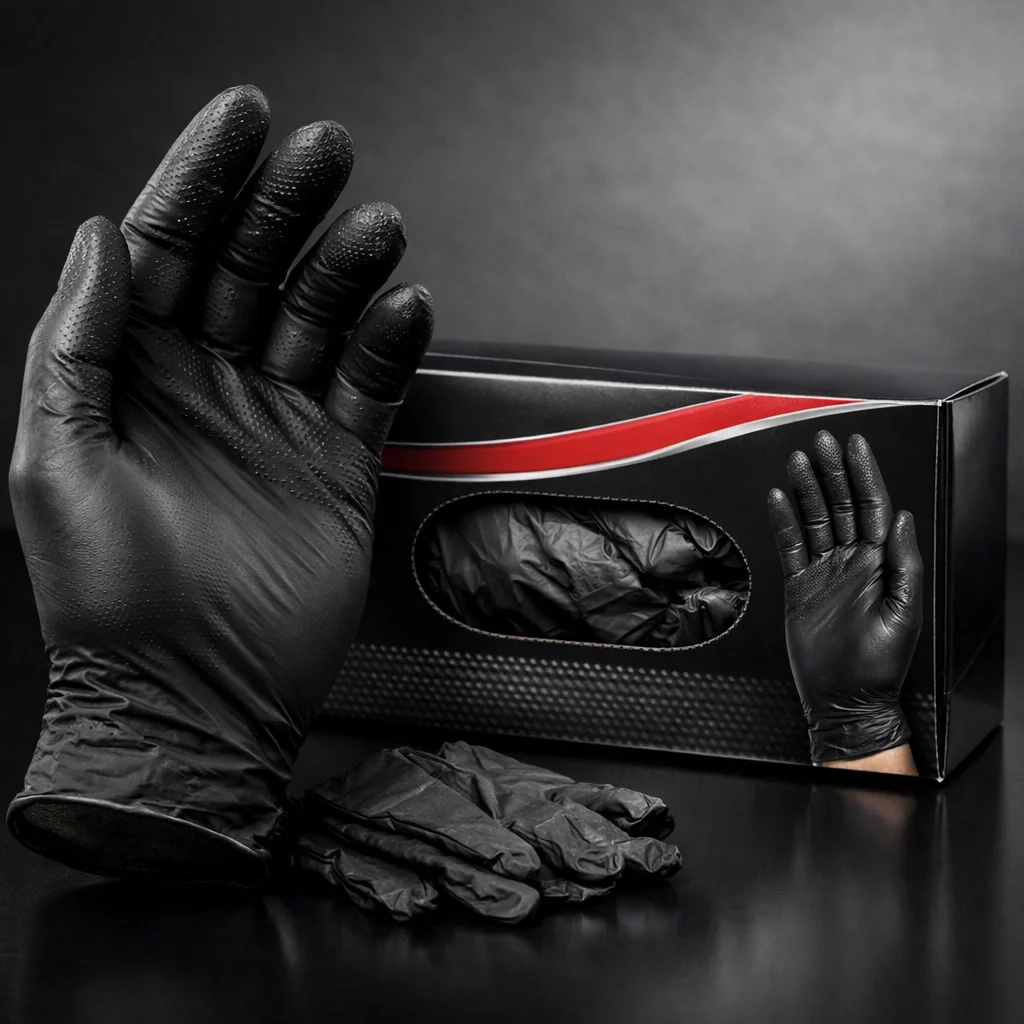
The textured surface on these Inspire gloves provides enhanced grip, which directly impacts your efficiency and safety when working on vehicles. The texture pattern (typically a diamond or raised pattern across the palm and fingers) increases friction between the glove surface and whatever you’re holding.
This matters when you’re using hand tools with smooth metal handles, especially when those tools have oil residue on them. Wrenches, ratchets, screwdrivers, and pliers stay more secure in your grip, reducing the chance of slippage that could strip bolt heads or cause injury. When handling oily engine parts, transmission components, or greasy suspension pieces, the textured grip prevents them from sliding out of your hands.
The gloves maintain adequate flexibility for most automotive tasks. You can operate ratchets and sockets, manipulate hose clamps, connect and disconnect electrical connectors, and handle small fasteners without excessive fumbling. The beaded cuff design (a rolled edge at the wrist opening) provides some wrist protection and helps prevent the glove from rolling down during use.
For comparison, if you’ve used those ultra-thin food service gloves for automotive work, you know they offer better sensitivity but tear almost immediately and provide minimal grip when wet or oily. If you’ve tried thick rubber work gloves, you know they’re nearly indestructible but make detailed work frustratingly difficult. These 6 mil gloves occupy the practical middle ground where most automotive tasks fall.
Sizing, Fit, and Comfort Considerations
Proper fit significantly affects both protection and usability. Inspire Black Nitrile Gloves are available in multiple sizes (typically Small through XX-Large), and choosing the correct size matters more than with casual-use gloves.
A properly fitted glove should feel snug without being tight. When you make a fist, the material shouldn’t bunch excessively at the knuckles. When your hand is open and relaxed, you shouldn’t see significant wrinkling across the palm. The fingertips should extend to your actual fingertips without excess material flopping around, but they shouldn’t be so tight that they restrict circulation or feel uncomfortable.
If the gloves are too large, you’ll experience reduced dexterity and increased risk of the glove catching on parts or tools. Excess material at the fingertips makes it harder to grip small items. If they’re too small, they’ll be difficult to put on, may tear during donning, and will fatigue your hands during extended use as the material constantly pulls against your movements.
For extended automotive work sessions (multiple hours), hand fatigue becomes a consideration. The 6 mil thickness and snug fit mean your hands work slightly harder than when bare or wearing thinner gloves. Your grip strength may tire more quickly, and you might notice hand warmth buildup since nitrile doesn’t breathe. Taking periodic breaks to remove the gloves and let your hands air out helps maintain comfort during long projects.
The gloves work reasonably well in both cold and moderate temperature environments. In very hot conditions (summer garage work without air conditioning), expect significant hand sweating inside the gloves. Some users keep a towel handy to dry hands between glove changes.
Durability and When to Expect Glove Failure
Understanding when these gloves will fail helps you use them effectively and safely. The 6 mil thickness provides good durability for disposable gloves, but “disposable” remains the key word. These aren’t designed for all-day use on a single pair.
For typical automotive tasks, expect one pair to last through a complete job if you’re careful. Changing oil, rotating tires, replacing brake pads, or swapping out an air filter can usually be completed with a single pair. More intensive work (like transmission removal, engine teardown, or extensive rust repair) will likely require multiple pairs as you encounter sharper edges and more abrasive surfaces.
Common failure points include fingertips (from sharp edges and constant contact with parts), the area between thumb and forefinger (from gripping tools), and anywhere the glove catches on a sharp protrusion. Small punctures often start as tiny holes that gradually enlarge as you continue working. Once you notice a hole, change gloves promptly. A compromised glove provides false security and may allow chemicals to contact your skin without you realizing it.
The gloves resist tearing better than thinner alternatives. If you snag a 4 mil glove on a sharp edge, it often tears dramatically. These 6 mil gloves are more likely to puncture without extensive tearing, which means you can sometimes carefully continue working for a few more minutes until you reach a convenient stopping point to change gloves.
Store unused gloves properly to maintain their quality. Keep them in their original box, away from direct sunlight, extreme temperatures, and ozone sources (like electric motors). Nitrile degrades over time even when unused, so check the manufacturing date if available and use older boxes first.
✅ What We Love About Inspire Black Nitrile Gloves
Excellent protection-to-dexterity ratio: The 6 mil thickness provides meaningful protection without completely sacrificing finger feel, making them practical for actual automotive work rather than just heavy-duty tasks.
Reliable chemical resistance: They handle the full range of common automotive fluids and chemicals without degrading quickly, protecting your skin from oils, greases, and most solvents during typical exposure times.
Professional appearance: The black color hides stains and maintains a clean look even after handling dirty parts, which matters if you’re working in a customer-facing environment or just prefer not to look at grimy gloves.
Reasonable price point: At $14.44, they offer better value than premium brands while providing significantly better performance than bargain options, hitting a practical price-to-performance sweet spot.
Latex-free and powder-free: This combination reduces allergic reaction risks and eliminates powder contamination concerns, making them suitable for people with latex sensitivities and for work requiring contamination control.
Textured grip works as advertised: The surface pattern genuinely improves grip on oily tools and parts, reducing slippage and improving work efficiency and safety.
❌ What Could Be Better
Limited heat resistance: These gloves offer minimal protection against hot surfaces. Brief contact with warm (not hot) parts is manageable, but they’re not suitable for handling hot exhaust components, freshly run engines, or heated materials.
Hand fatigue during extended use: The thickness and snug fit can cause hand tiredness during multi-hour work sessions, particularly if you’re doing grip-intensive tasks. Your hands may need periodic breaks.
Reduced sensitivity for precision work: While adequate for most automotive tasks, the 6 mil thickness does reduce tactile feedback compared to thinner gloves, which can be frustrating for detailed electrical work or precision adjustments.
Not reusable: As disposable gloves, they’re designed for single-use or single-task use. If you’re doing extensive automotive work regularly, the ongoing cost of disposables adds up compared to washable work gloves for non-chemical tasks.
Sizing can be inconsistent: Some users report slight variations in sizing between boxes, which may require trying different sizes to find the best fit for your hands.
Sweat buildup in warm conditions: The non-breathable nitrile material traps moisture, leading to sweaty, uncomfortable hands during summer work or in heated garages.
Who Should Buy Inspire Black Nitrile Gloves?
These gloves are ideal for home mechanics and DIY enthusiasts who perform regular automotive maintenance and repairs. If you change your own oil, do brake jobs, replace suspension components, or perform general vehicle maintenance, these gloves provide the protection you need at a reasonable cost.
Professional mechanics working in shops will find these useful for general repair work, particularly if they prefer disposable gloves over reusable options. The chemical resistance and durability make them practical for the variety of tasks encountered in automotive repair environments.
Detailers and car cleaning professionals benefit from the chemical resistance when working with degreasers, wheel cleaners, and other detailing chemicals while maintaining enough dexterity for detailed work.
Painters and body shop workers can use these for prep work, masking, and handling parts (though they should switch to thinner gloves for actual painting to maximize sensitivity). The powder-free construction prevents contamination of paint surfaces.
Anyone working with small engines, motorcycles, ATVs, lawn equipment, or other machinery will find these gloves suitable for maintenance and repair tasks involving oils, fuels, and mechanical components.
People with latex allergies who need protective gloves for various tasks (not just automotive) will appreciate the latex-free nitrile construction that provides protection without allergic reaction risks.
Who Should Skip These Gloves?
If you need maximum tactile sensitivity for electronics work, precision assembly, or detailed tasks requiring full finger feel, thinner 4 mil gloves or specialized precision work gloves would serve you better. The 6 mil thickness, while reasonable, does reduce sensitivity.
For heavy industrial work involving sharp metal fabrication, welding prep, or handling extremely abrasive materials, you need purpose-built industrial gloves with higher mil ratings (8-15 mil) or cut-resistant materials. These 6 mil gloves will fail too quickly in those environments.
If you’re doing extensive work with aggressive solvents, strong acids, or specialized chemicals beyond typical automotive fluids, you need chemical-specific gloves rated for those substances. Check chemical compatibility charts for your specific chemicals.
For tasks requiring heat protection (handling hot exhaust systems, working near heat sources, or touching heated parts), you need heat-resistant gloves. These nitrile gloves will melt or burn when exposed to significant heat.
If you’re looking for all-day gloves for continuous wear during extended work shifts, reusable work gloves with better breathability and comfort features would be more appropriate. Disposable gloves become uncomfortable during very long wear periods.
Budget-conscious users doing only occasional, light automotive work might find adequate protection in cheaper 4 mil gloves, saving the cost difference. The 6 mil thickness provides benefits primarily for regular or intensive use.
How to Get the Best Value from Your Purchase
Buy in appropriate quantities based on your usage patterns. If you do automotive work weekly, purchasing multiple boxes when they’re on sale reduces your per-glove cost. However, don’t overbuy since nitrile degrades over time even when stored properly.
Check for multi-box deals or subscribe-and-save options if available through retailers. The per-box price often drops significantly when buying three or more boxes at once.
Choose the correct size on your first purchase to avoid wasting money on ill-fitting gloves. If you’re between sizes, order both and return the one that doesn’t fit. Proper fit extends glove life and improves usability.
Use gloves appropriately to maximize their lifespan. Change them when they’re compromised, but don’t change them unnecessarily if they’re still intact. One pair can often handle a complete automotive task if you’re not encountering excessive sharp edges.
Store gloves properly in their original box, away from sunlight, heat, and ozone sources. Proper storage maintains glove quality and prevents premature degradation.
Consider keeping multiple glove types on hand. Use these 6 mil gloves for chemical exposure and rough work, but switch to thinner gloves for precision tasks or thicker gloves for heavy-duty work. Using the right glove for each task improves both safety and cost-effectiveness.
Watch for seasonal sales, particularly around major shopping events. Disposable gloves often go on sale during these periods, allowing you to stock up at reduced prices.
Frequently Asked Questions
How many gloves come in a box at the $14.44 price point?
Box quantities vary by retailer and package option, typically ranging from 50 to 100 gloves per box. Check the specific product listing for the exact count, as this significantly affects the per-glove cost. A 100-count box at $14.44 costs about $0.14 per glove, while a 50-count box costs about $0.29 per glove.
Can I reuse these gloves if I wash them after use?
No, these are designed as single-use disposable gloves. Washing them compromises their chemical resistance and structural integrity. The material may develop micro-tears or weak spots that aren’t visible but reduce protection. For tasks requiring reusable gloves, purchase purpose-built washable work gloves instead.
Will these gloves protect against gasoline and diesel fuel?
Yes, for brief to moderate exposure typical of automotive work. Nitrile provides good resistance to petroleum products. However, prolonged immersion in gasoline or diesel will eventually cause the material to swell and degrade. For quick fuel spills, filling equipment, or handling fuel-contaminated parts, they work well. For draining fuel tanks or extended fuel exposure, consider specialized fuel-resistant gloves.
Are these gloves suitable for food preparation after automotive work?
Never use the same gloves for both automotive work and food preparation. Even if they appear clean, they may have microscopic contamination from automotive chemicals. Keep separate boxes of gloves for food tasks and automotive tasks. These gloves are safe for food prep when new and unused, but once used for automotive work, discard them.
How do I know which size to order?
Measure your hand width across the palm at its widest point (excluding the thumb). Small typically fits 7-8 inches, Medium 8-9 inches, Large 9-10 inches, and X-Large 10-11 inches. If you’re between sizes, size up for comfort during extended wear or size down for maximum dexterity. Most retailers accept returns if the size doesn’t fit properly.
Do these gloves provide any cut resistance?
They provide minimal cut resistance compared to purpose-built cut-resistant gloves. The 6 mil thickness offers more protection than thin gloves against accidental cuts from moderately sharp edges, but they’re not rated for cut resistance. If you’re working with extremely sharp metal edges, glass, or doing metal fabrication, use gloves with specific cut-resistance ratings (ANSI/ISEA 105 standards).
Can I use these gloves for painting or applying finishes?
Yes, for prep work, masking, and handling parts. The powder-free construction won’t contaminate surfaces. However, for actual paint application requiring maximum sensitivity (like detail work or fine finishing), consider switching to thinner 4 mil gloves. The 6 mil thickness is adequate for spray painting, rolling, or brushing where precision isn’t critical.
How long can I store unopened boxes before the gloves degrade?
Properly stored nitrile gloves typically maintain quality for 3-5 years from manufacture. Store them in a cool, dry location away from direct sunlight, ozone sources, and temperature extremes. Check for manufacturing or expiration dates on the box. If gloves become sticky, brittle, or discolored, they’ve degraded and should be discarded.
Final Verdict: A Practical Choice for Regular Automotive Work
The Inspire Black Nitrile Gloves deliver solid performance for automotive work at a reasonable price point. The 6 mil thickness provides meaningful protection against the chemicals, sharp edges, and rough handling common in vehicle maintenance and repair without completely sacrificing the dexterity needed for actual mechanical work.
At $14.44, these gloves occupy a practical middle ground. They’re not the cheapest option, but the enhanced durability and chemical resistance justify the modest price premium over bargain gloves that tear within minutes of real use. They’re also significantly less expensive than premium industrial gloves while providing adequate protection for most automotive tasks.
The chemical resistance handles common automotive fluids effectively, the textured grip improves tool and part handling, and the black color maintains a professional appearance even when working with dirty components. The latex-free, powder-free construction eliminates common concerns about allergic reactions and contamination.
These gloves work best for home mechanics doing regular maintenance, professional technicians wanting disposable protection, and anyone working with automotive chemicals and mechanical components. They’re less suitable for tasks requiring maximum sensitivity, heavy industrial work, or heat protection.
If you’re tired of thin gloves that tear immediately or thick gloves that make detailed work impossible, these Inspire Black Nitrile Gloves offer a practical solution. They won’t solve every hand protection need, but for general automotive work, they hit the sweet spot between protection, usability, and cost.
For more helpful product reviews and practical buying guides, visit Best Cheap Buy. If you’re looking for other protective equipment options, check out our guide on hand protection during tough jobs or learn about keeping your hands safe during various tasks.