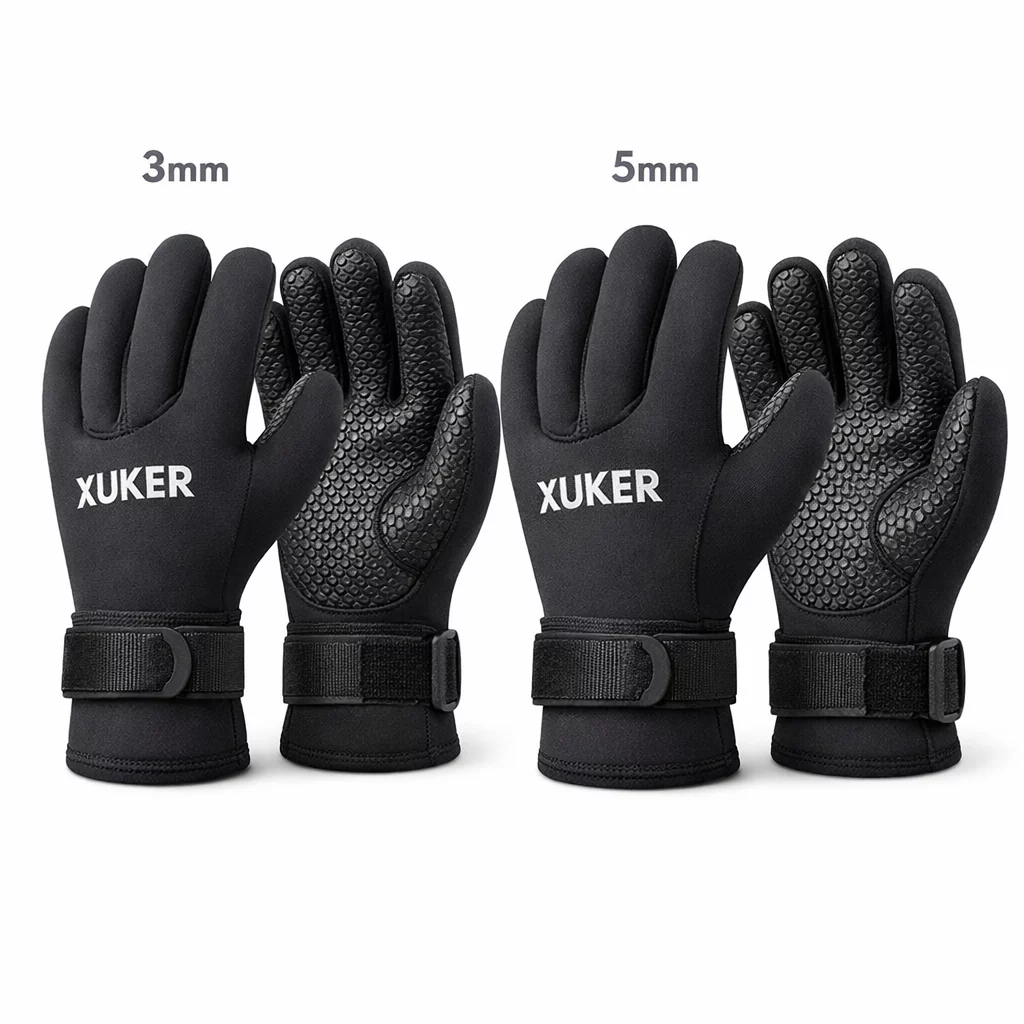
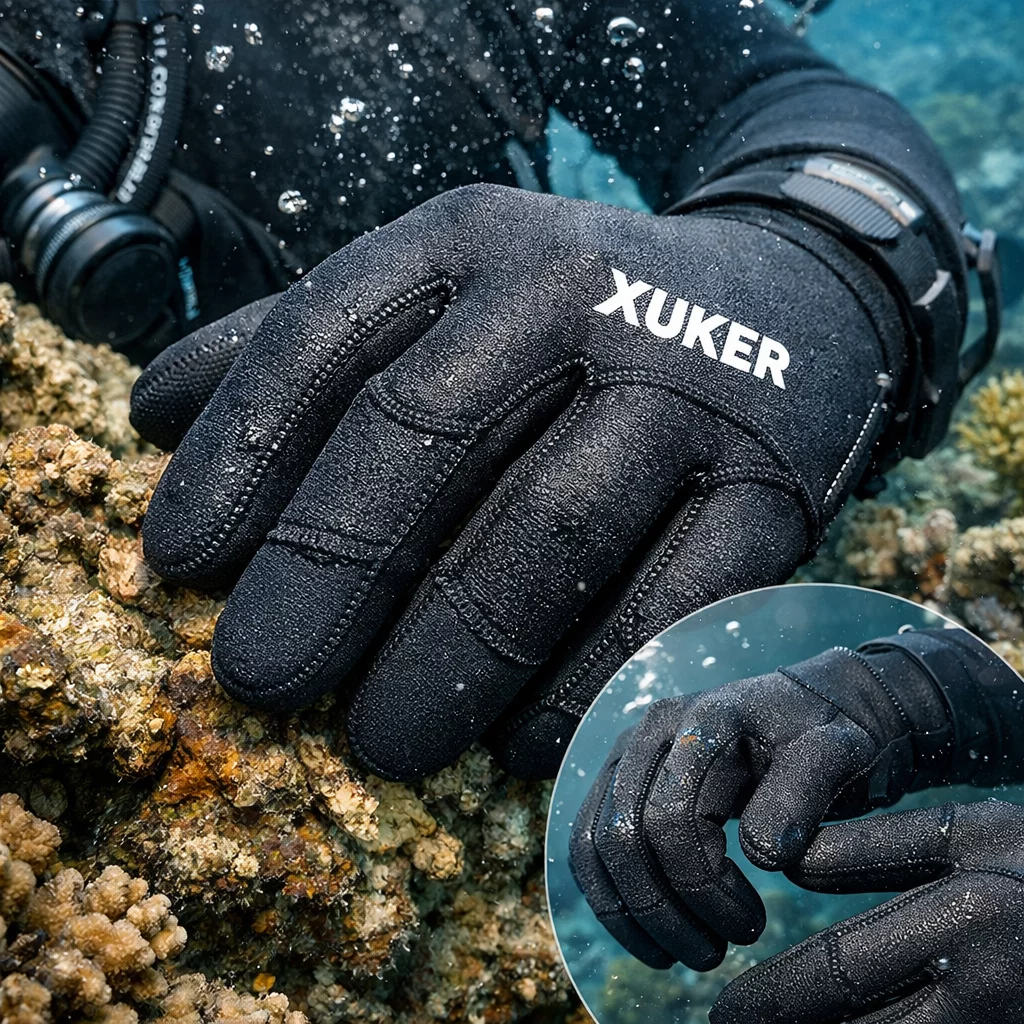
The XUKER Water Gloves are five-finger neoprene gloves available in 3mm and 5mm thickness options, designed specifically for cold-water activities including scuba diving, snorkeling, and various water sports. These gloves provide thermal protection while maintaining finger dexterity, making them suitable for trainee divers who need hand warmth without sacrificing the ability to operate equipment. The gloves feature textured palms for grip, adjustable wrist closures, and are priced competitively for entry-level diving gear.
Key Takeaways
Available in two thickness options: 3mm for moderate cold water (65-75°F) and 5mm for colder conditions (50-65°F)
Five-finger design allows full dexterity for operating dive computers, BCD inflators, and other equipment
Textured palm and finger surfaces provide reliable grip on wet gear and surfaces
Adjustable wrist straps with hook-and-loop closures prevent water flushing and keep gloves secure
Suitable for multiple water activities beyond diving, including kayaking, paddling, and surfing
Sizing runs standard but requires careful measurement for proper thermal efficiency
Flatlock stitching reduces chafing and improves durability at stress points
Entry-level price point makes them accessible for trainee divers building their gear collection
What Are XUKER Water Gloves and Who Makes Them?
XUKER Water Gloves are neoprene thermal gloves designed to protect hands during cold-water activities while maintaining the finger mobility needed for technical tasks. The gloves address a common problem for trainee divers: finding affordable hand protection that doesn’t compromise your ability to clear your mask, adjust your regulator, or check your gauges underwater.
The manufacturer, XUKER, produces water sports equipment focused on the budget-conscious segment of the market. While they don’t have the brand recognition of established diving manufacturers, their products target recreational users and those building their first complete dive kit. The gloves are constructed from standard neoprene material—the same synthetic rubber used in wetsuits—which provides insulation by trapping a thin layer of water against your skin that your body heat warms.
For trainee divers specifically, these gloves solve the challenge of maintaining hand warmth during training dives in temperate waters without the bulk that makes learning proper equipment handling more difficult. The five-finger design is particularly important during training because you need to develop muscle memory for critical skills like operating your alternate air source or performing safety stops while monitoring your dive computer.
How Thick Should Your Diving Gloves Be? Understanding the 3mm vs 5mm Choice
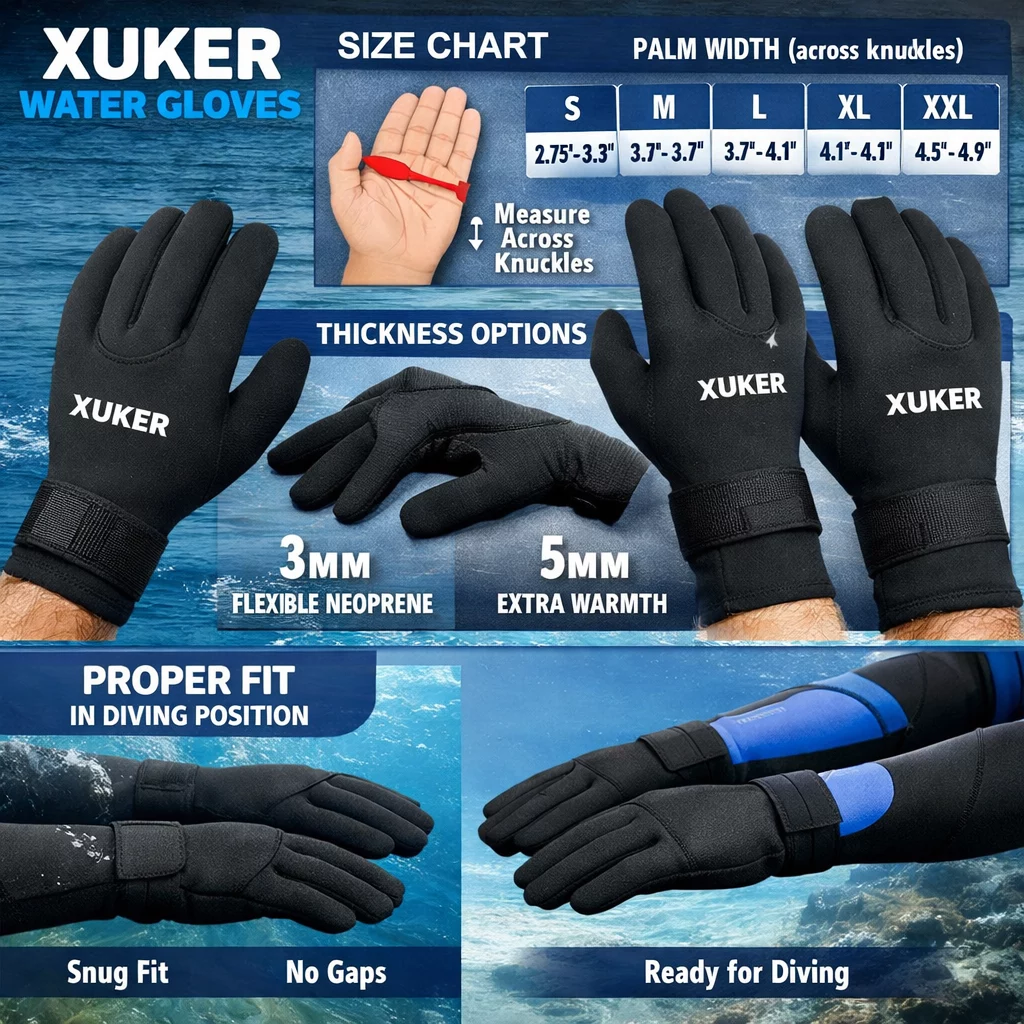
The XUKER gloves come in two thickness options, and choosing correctly affects both your comfort and your ability to perform underwater tasks. The 3mm version works best for water temperatures between 65-75°F (18-24°C), which covers many popular training dive locations during warmer months. The 5mm version extends your comfort range down to approximately 50-65°F (10-18°C), suitable for cooler waters or divers who feel cold easily.
Thicker isn’t always better. The 5mm gloves provide more insulation but reduce tactile feedback and finger flexibility. As a trainee diver, you’re still developing the fine motor skills needed underwater, and excessive bulk can make simple tasks frustrating. If your training dives occur in water above 70°F, the 3mm option gives you adequate warmth while keeping your hands nimble enough to feel what you’re doing.
Choose 3mm gloves if:
Your training dives occur in water warmer than 65°F
You prioritize finger dexterity and tactile feedback
You’re also using the gloves for snorkeling or surface water sports
You tend to run warm or generate significant body heat during activity
Choose 5mm gloves if:
You’re training in water consistently below 65°F
You have poor circulation or feel cold easily
You’re planning to progress to deeper or longer dives where temperature drops
You need maximum thermal protection and can adapt to reduced sensitivity
The thickness also affects buoyancy slightly. Neoprene is buoyant, so 5mm gloves add marginally more positive buoyancy to your hands than 3mm versions. This rarely matters for recreational diving, but it’s worth noting if you’re working on perfecting your trim and buoyancy control during training.
What Makes the Five-Finger Design Important for Dive Training?
The five-finger configuration of XUKER gloves is a deliberate design choice that impacts your training experience significantly. Unlike mitten-style gloves or three-finger lobster claw designs, individual fingers allow you to perform precise movements required for safe diving.
During your training, you’ll need to operate equipment with cold hands: adjusting your BCD inflator button, clearing your mask by pressing the top seal while exhaling through your nose, switching to your alternate air source, and reading small displays on your dive computer. The XUKER gloves maintain finger independence, so you can practice these skills with hand protection rather than diving bare-handed or struggling with bulkier options.
The glove fingers are pre-curved slightly to match your natural hand position when relaxed. This reduces hand fatigue during longer dives because you’re not fighting the material to maintain a grip. The fingertips are reinforced in most sizes, which matters when you’re learning proper finning technique and occasionally steadying yourself on rocks or the dive platform.
For trainee divers specifically, the five-finger design helps you develop proper hand signals for underwater communication. Standard dive signals require specific finger positions—showing “OK” by touching your thumb and index finger, indicating “something is wrong” with a flat hand wobble, or signaling numbers with extended fingers. Mittens make these signals ambiguous or impossible, which can create safety issues during training when clear communication with your instructor is essential.
How Does the Grip Pattern Perform on Wet Dive Equipment?
The palm and finger surfaces of XUKER gloves feature a textured pattern designed to improve grip on wet, slippery surfaces. This texturing consists of small raised dots or diamond patterns (depending on the production batch) that create friction points between your gloved hand and whatever you’re holding.
In practical terms, this matters most when you’re operating your BCD inflator and deflator buttons. These small buttons can be difficult to press firmly when your hands are cold and everything is wet. The textured palm helps you maintain pressure without your hand slipping off. Similarly, when you’re adjusting your regulator or alternate air source, the grip pattern prevents the equipment from sliding through your fingers.
The texture also helps when you’re climbing back onto a dive boat using a ladder. Wet ladder rungs are notoriously slippery, and the glove surface provides additional friction that makes the climb safer. During training dives from shore, the grip helps when you’re walking over rocky entries or steadying yourself against a wall during pool sessions.
However, the grip pattern has limitations. It works well on hard surfaces like plastic equipment, metal ladders, and dive computers, but it’s less effective on soft materials like rope or fabric straps. If you’re doing wreck diving training that involves line work, the gloves provide some grip but not as much as specialized rope-handling gloves. For standard recreational dive training, the grip level is appropriate for the tasks you’ll encounter.
What Should You Know About the Wrist Closure System?
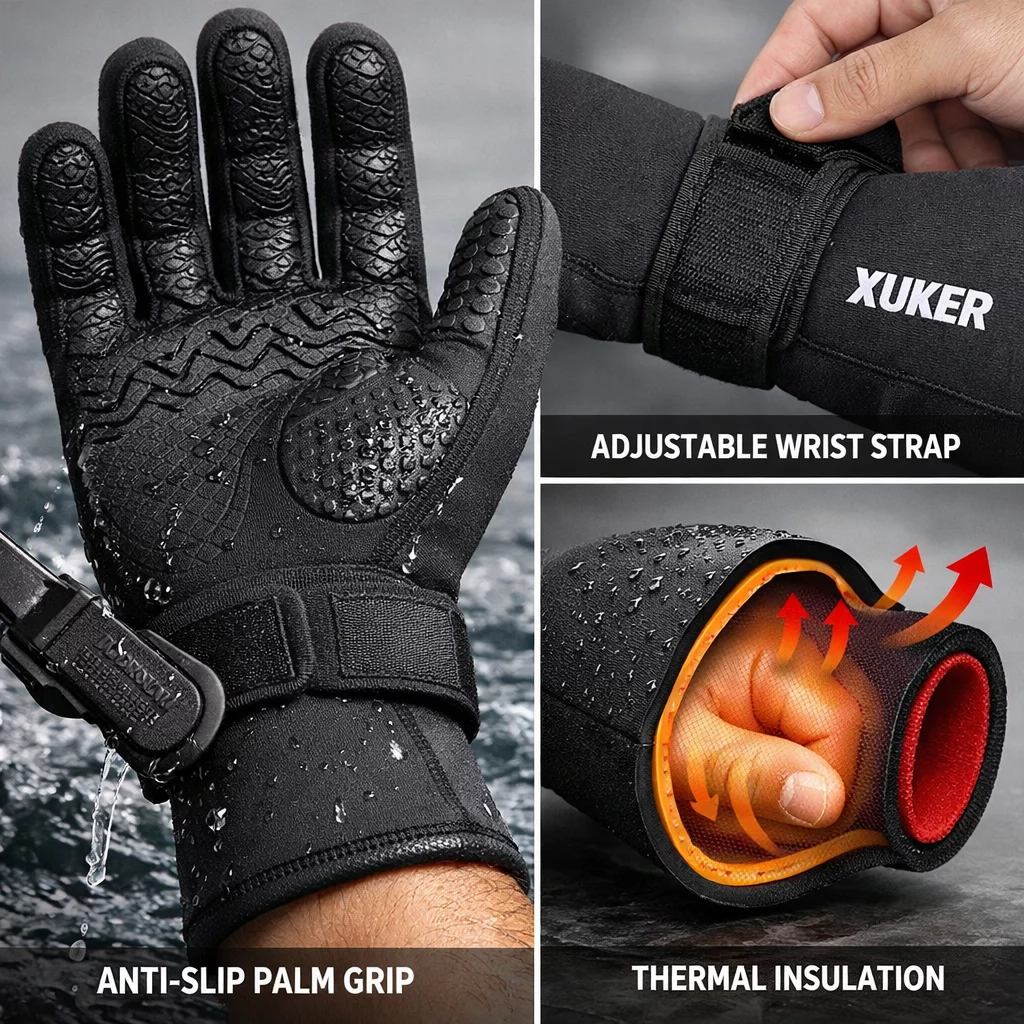
The XUKER gloves use an adjustable wrist strap with hook-and-loop (Velcro-style) closure to secure the gloves and minimize water exchange. This closure system serves two purposes: keeping the gloves on your hands during the dive and reducing the amount of cold water that flushes through the glove opening.
The strap wraps around your wrist and overlaps, allowing you to adjust the tightness. For trainee divers, getting this adjustment right takes some experimentation. Too loose, and cold water continuously flushes through the opening, defeating the thermal purpose of the gloves. Too tight, and you restrict blood flow to your hands, which actually makes them colder and can cause discomfort or numbness.
The proper technique is to secure the strap snugly but not tightly—you should be able to slide one finger between the strap and your wrist with slight resistance. When you’re wearing a wetsuit, the glove opening should overlap the wetsuit sleeve by about an inch. This overlap creates a better seal and prevents the gap that allows water exchange.
One practical consideration: the hook-and-loop closure can catch on other equipment or your wetsuit material. When you’re donning and doffing your gear, be mindful of the exposed hook side of the closure. Some divers fold a small piece of the strap back on itself when not wearing the gloves to protect the hooks and prevent them from snagging on other gear in your dive bag.
The closure system is also where these gloves show their budget-oriented design. The hook-and-loop material is functional but not as durable as what you’ll find on premium diving gloves. After 30-40 dives, the hooks may lose some gripping power, and the strap may show wear. For trainee divers completing their certification and early recreational dives, this durability level is typically sufficient.
How Do You Choose the Right Size for Proper Thermal Protection?
Sizing neoprene gloves correctly is more critical than sizing regular gloves because improper fit directly affects thermal performance. The XUKER gloves are available in standard sizes (typically S, M, L, XL), and the manufacturer provides a sizing chart based on hand measurements.
To measure your hand for these gloves, you need two measurements: hand circumference and hand length. For circumference, wrap a flexible measuring tape around your dominant hand at the widest point across your palm, excluding your thumb. For length, measure from the tip of your middle finger to the base of your palm where it meets your wrist. Compare both measurements to the manufacturer’s chart and choose the size where both measurements fall within range.
Proper fit characteristics:
Fingers reach the end of the glove fingers without excess material bunching
Palm material lies flat against your palm without gaps or wrinkles
You can make a fist without the material pulling excessively tight
The wrist opening sits comfortably on your wrist without cutting in
You can touch your thumb to each fingertip without strain
Neoprene gloves should fit snugly—much tighter than regular gloves. This snug fit is intentional because it minimizes the water layer between your skin and the neoprene, which improves thermal efficiency. However, if the gloves are so tight that your fingers feel compressed or your hand circulation is restricted, size up.
A common mistake among trainee divers is choosing gloves that are too large, thinking they’ll be more comfortable. Oversized gloves allow excessive water to pool inside, which your body must constantly warm. This water exchange makes your hands colder, not warmer. The gloves also become clumsy when too large, making equipment operation more difficult.
If you’re between sizes, consider your primary use. For warmer water where you’re choosing 3mm thickness, you can size up slightly for comfort. For colder water with 5mm gloves, stay with the smaller size for better thermal performance.
What Activities Beyond Diving Work Well With These Gloves?
While marketed for diving, the XUKER gloves function effectively for multiple water activities, which makes them a versatile addition to your gear collection. The same properties that make them suitable for diving—thermal protection, grip, and finger dexterity—apply to other cold-water sports.
Kayaking and canoeing: The gloves provide warmth during early season or late season paddling when water temperatures are low. The five-finger design allows you to maintain proper paddle grip and perform the fine motor control needed for steering strokes. The textured palm helps prevent the paddle shaft from rotating in your hands during power strokes.
Surfing and paddleboarding: In cold water surf conditions, the gloves protect your hands while allowing you to grip your board rails for duck dives or maintain contact with your paddle. The 3mm version is typically preferred for these activities because the thinner material provides better feel for board control.
Snorkeling: The gloves protect your hands from sun exposure, jellyfish stings, and sharp coral or rocks while allowing you to operate your snorkel, adjust your mask, or hold an underwater camera. For snorkeling in tropical waters, the thermal protection is secondary to the physical protection benefit.
Spearfishing: The gloves provide some protection when handling fish and loading spear guns, though dedicated spearfishing gloves typically have additional reinforcement. The grip pattern helps with handling slippery fish and maintaining control of your spear.
One limitation to note: these gloves are designed for water immersion, not for activities where your hands alternate between wet and dry. For activities like fishing from shore or boat work where your hands are frequently out of the water, neoprene gloves can feel clammy and uncomfortable. They work best when you’re consistently in or on the water.
How Do You Care for Neoprene Gloves to Maximize Their Lifespan?
Proper maintenance significantly extends the functional life of neoprene gloves, which is particularly important for budget-conscious trainee divers. Neoprene degrades from several factors: salt accumulation, UV exposure, improper storage, and petroleum-based products.
After each dive session:
Rinse the gloves thoroughly in fresh water, inside and out, to remove salt, chlorine, and organic material
Turn the gloves inside out to ensure the interior gets rinsed
Gently squeeze (don’t wring) excess water from the gloves
Hang them to dry in a shaded, well-ventilated area away from direct sunlight
Allow them to dry completely before storage—damp neoprene can develop mildew
Storage guidelines:
Store gloves flat or hanging, never folded or compressed
Keep them away from heat sources, which can cause neoprene to become brittle
Avoid storing them in direct sunlight or in a hot car
Don’t store them in a sealed plastic bag while damp
Keep them away from petroleum products, solvents, or strong chemicals
The hook-and-loop closures require specific attention. After rinsing, pick out any sand, hair, or debris caught in the hooks using a stiff brush or old toothbrush. This prevents the hooks from losing their grip and extends the closure’s functional life. When storing, fold the strap back on itself so the hooks don’t catch on the neoprene material.
Periodically inspect the gloves for damage. Check the seams for separation, examine the fingertips for tears or thinning, and verify that the wrist strap attachment points remain secure. Small tears can be repaired with neoprene cement (available at dive shops) before they expand into larger problems.
One maintenance tip specific to these gloves: the interior lining can develop odor if not dried properly. If your gloves start to smell, soak them in a solution of water and specialized wetsuit shampoo (or a small amount of baby shampoo) for 15-20 minutes, then rinse thoroughly and dry completely. Avoid using regular laundry detergent, which can break down neoprene.
✅ What We Love About XUKER Water Gloves
Accessible price point for trainee divers: These gloves provide essential thermal protection without the premium price tag of established dive brands, making them practical for divers building their initial gear collection.
True five-finger dexterity: The individual finger design allows you to perform all necessary dive skills and equipment operations without the clumsiness of mitten-style alternatives.
Dual thickness options: Having both 3mm and 5mm versions available lets you choose appropriate thermal protection for your specific diving conditions rather than compromising with a one-size-fits-all approach.
Functional grip pattern: The textured palm and fingers provide reliable friction on wet equipment, which matters when you’re operating BCD controls, handling regulators, or climbing dive ladders.
Versatile beyond diving: The gloves work well for multiple water activities, giving you more value from a single purchase if you participate in kayaking, surfing, or other water sports.
Adjustable wrist closure: The hook-and-loop strap allows you to customize the fit and minimize water flushing, which improves thermal performance.
Standard sizing: The gloves follow conventional sizing charts, making it easier to select the right size without extensive trial and error.
BUY CHEAP XUKER WATER GLOVES NOW
❌ What Could Be Better
Durability limitations: The hook-and-loop closures and seam stitching show wear faster than premium gloves, typically requiring replacement after one to two seasons of regular use.
Limited sizing precision: The standard S/M/L/XL sizing doesn’t accommodate hands that fall between sizes or have unusual proportions (long fingers with narrow palms, for example).
Basic construction quality: The flatlock stitching is functional but not as refined as higher-end gloves, with occasional loose threads or uneven seam allowances visible on inspection.
Minimal reinforcement: The fingertips and palm wear points lack the heavy-duty reinforcement found on more expensive gloves, making them vulnerable to abrasion damage.
Generic fit: The gloves use a standard hand shape pattern that may not conform well to all hand types, potentially leaving gaps or pressure points depending on your individual hand structure.
No integrated features: Unlike some diving gloves, these lack features like textured fingertips for touchscreen compatibility or reinforced areas for specific activities like spearfishing.
Who Should Buy XUKER Water Gloves?
These gloves are ideal for trainee divers working toward their open water certification or recently certified divers building their personal gear collection. If you’re taking courses in temperate waters where hand protection improves comfort but isn’t absolutely critical, these gloves provide appropriate thermal protection without significant financial investment.
The gloves also suit recreational divers who dive occasionally (10-20 dives per year) in moderate conditions. If you’re not diving frequently enough to justify premium gear prices, the XUKER gloves offer adequate performance for casual use. They’re particularly appropriate if you participate in multiple water activities and want one pair of gloves that works reasonably well across different sports.
Budget-conscious divers who accept that gear at this price point requires more frequent replacement will find these gloves deliver good value. If you’re comfortable replacing gloves every season or two rather than investing in a single pair that lasts five years, the lower initial cost makes sense.
Divers with standard hand proportions who fit conventional sizing will have better success with these gloves. If your hands match the manufacturer’s sizing chart measurements without falling between sizes, you’re more likely to achieve proper fit and thermal performance.
Who Should Skip XUKER Water Gloves?
Serious divers planning frequent cold-water diving (water below 50°F) need more robust thermal protection than these gloves provide. Even the 5mm version has limitations in truly cold conditions, and the construction quality isn’t designed for demanding environments. If you’re training for technical diving, ice diving, or regular cold-water diving, invest in premium gloves from established dive manufacturers.
Divers with non-standard hand shapes or sizes that fall between the available options should look elsewhere. If you have particularly long fingers, wide palms, or other proportions that don’t match standard sizing, the poor fit will compromise both comfort and thermal performance. Custom or semi-custom gloves from specialty manufacturers will serve you better despite higher cost.
If you need gloves for professional use—dive instruction, commercial diving, or scientific diving where you’re in the water daily—these gloves won’t withstand the wear. The durability limitations become significant problems when you’re diving frequently, and the cost of regular replacement exceeds the savings from the lower initial price.
Divers who prioritize specific features like touchscreen compatibility, heavy-duty reinforcement for wreck diving, or specialized grip patterns for spearfishing should choose gloves designed for those purposes. The XUKER gloves are generalists that perform adequately across multiple activities but don’t excel at any specific task.
BUY CHEAP XUKER WATER GLOVES NOW
How to Get the Best Deal on XUKER Water Gloves
Since these gloves are primarily available through online retailers, particularly Amazon, your purchasing strategy should focus on timing and bundling opportunities. Prices fluctuate based on season, with the best deals typically appearing during off-season periods (late spring and early fall) when demand for cold-water gear decreases.
Money-saving strategies:
Check prices during major sale events (Prime Day, Black Friday, end-of-season sales)
Look for multi-item discounts if you’re purchasing other dive gear simultaneously
Compare prices between the 3mm and 5mm versions, as one thickness may be discounted while the other isn’t
Read recent reviews to verify you’re getting current production quality, not old stock
Consider purchasing one size up and one size down if you’re uncertain about fit, then returning the pair that doesn’t work (verify the return policy first)
When evaluating the price, factor in the realistic lifespan. If the gloves cost $25 and last for 30-40 dives over two seasons, your cost per dive is roughly $0.60-$0.80. Compare this to premium gloves that might cost $80 but last for 150 dives, giving you a cost per dive of approximately $0.53. The premium gloves are actually more economical long-term, but the XUKER gloves require less upfront capital, which matters if you’re uncertain about your diving commitment or need to spread gear purchases across multiple budget cycles.
For trainee divers specifically, consider timing your purchase to align with your certification course. Some dive shops offer package deals that include basic accessories like gloves when you purchase or rent your primary gear. However, shop-provided gloves are often lower quality than the XUKER gloves, so purchasing your own may still be worthwhile.
Verify the seller’s return policy before purchasing, especially regarding sizing issues. Neoprene gloves can’t be properly evaluated for fit until you’ve worn them in water, but many retailers don’t accept returns on gear that’s been submerged. Some sellers allow returns if the gloves are tried on but not used underwater, which gives you an opportunity to check basic fit before committing.
Frequently Asked Questions
Can I use these gloves in a swimming pool during confined water training?
Yes, the XUKER gloves work fine in pool environments during confined water training sessions. However, many pools maintain water temperatures around 80-82°F, which may make gloves unnecessary for thermal protection. Some instructors prefer students train without gloves initially to develop proper equipment handling skills, then add gloves once basic skills are mastered. Check with your instructor before purchasing, as some training programs have specific requirements about when gloves should be introduced.
How do I know if I need 3mm or 5mm thickness?
Choose based on the coldest water temperature you expect to encounter regularly. For water 65°F and warmer, 3mm provides adequate warmth while maintaining better dexterity. For water between 50-65°F, choose 5mm for improved thermal protection. If you’re unsure, start with 3mm—you can always add thicker gloves later if you find yourself cold, but you can’t make 5mm gloves thinner if they’re too bulky for your needs.
Will these gloves work with my dive computer touchscreen?
Standard neoprene gloves, including the XUKER models, don’t typically work with capacitive touchscreens because the neoprene material doesn’t conduct the electrical signal your finger would provide. If your dive computer has a touchscreen, you’ll need to remove a glove to operate it, or look for gloves specifically designed with conductive fingertips. Most dive computers used in training have physical buttons rather than touchscreens, so this limitation rarely affects trainee divers.
How long should I expect these gloves to last?
With proper care and moderate use (20-30 dives per year), expect 1-2 seasons of functional life before the hook-and-loop closures weaken significantly or the seams begin separating. Heavy use or poor maintenance (not rinsing, storing in sunlight, leaving damp) can reduce lifespan to a single season. The gloves will likely remain waterproof longer than the closures remain effective, so closure failure is typically what ends their useful life.
Can I repair small tears in the neoprene?
Yes, small tears and punctures can be repaired using neoprene cement (also called wetsuit glue) available at dive shops or online. Clean and dry the damaged area thoroughly, apply a thin layer of cement to both sides of the tear, wait until it becomes tacky (usually 5-10 minutes), then press the surfaces together firmly and allow to cure for 24 hours. This repair works best on small tears (under 1 inch) and extends the gloves’ life, though repaired areas are weaker than original material.
Should the gloves go over or under my wetsuit sleeves?
The gloves should go over your wetsuit sleeves, with the wetsuit material tucked inside the glove opening by about an inch. This overlap prevents water from flushing between the glove and wetsuit, which would defeat the thermal protection of both pieces. Secure the wrist strap over this overlap to hold everything in place. Some divers prefer to fold the wetsuit sleeve back slightly before pulling the glove on, then unfold it to create the overlap, which can make donning easier.
Final Verdict: Are XUKER Water Gloves Right for Your Dive Training?
The XUKER Water Gloves represent a practical entry point for trainee divers who need hand protection without premium pricing. These gloves successfully deliver their core promise: keeping your hands warm enough to focus on learning dive skills rather than being distracted by cold fingers. The five-finger design maintains the dexterity essential for equipment operation during training, and the dual thickness options let you match the gloves to your specific diving conditions.
For trainee divers specifically, these gloves solve a real problem at a price point that makes sense when you’re already investing in certification courses, basic equipment, and travel to dive sites. They’re not the gloves you’ll use for a lifetime of diving, but they’re appropriate for the training phase and your first season or two of recreational diving. The construction quality reflects the budget positioning—functional and adequate rather than exceptional—but this is acceptable when you’re still determining your long-term commitment to diving.
The gloves work best for divers training in moderate conditions (water temperatures 50-75°F) who have standard hand proportions that fit conventional sizing. If this describes your situation, the XUKER gloves deliver good value. They’ll protect your hands during training dives, work for other water activities, and serve you adequately until you’ve gained enough experience to know exactly what features matter most to you in diving gloves.
If you’re serious about diving and plan to dive frequently in challenging conditions, consider these gloves a temporary solution while you save for premium alternatives. For casual recreational divers who dive occasionally in moderate conditions, these gloves may be all you ever need. The key is matching your expectations to the product’s capabilities: these are solid budget gloves that perform their basic function well, not premium gear that will last for years of intensive use.
For more insights on protective gear and equipment, visit Best Cheap Buy for comprehensive reviews. If you’re interested in maintaining your overall health during dive training, check out our guide on 5 ways to make winter your healthiest season, which includes tips relevant to cold-water activities.