Last updated: April 10, 2026
Quick Answer
The Kensizer Humane Rat Trap works through a sensitive trigger plate mechanism that activates when a rodent enters to reach bait, causing a spring-loaded door to close behind them. The lightweight aluminum or galvanized steel frame with fine wire mesh keeps the animal safely contained without harm until you can release it outdoors, away from your home.
Key Takeaways
- The trap uses a high-sensitivity trigger plate that responds to even lightweight rodents like mice and young rats
- Wire mesh construction prevents escape while allowing visibility and airflow for the captured animal’s safety
- The one-way door mechanism closes automatically when triggered and stays shut until manually opened
- Works effectively for rats, mice, chipmunks, voles, and even escaped pet hamsters
- No direct contact needed during release thanks to the easy-open door design
- Requires strategic placement near rodent activity zones and attractive bait to work effectively
- Reusable design makes it cost-effective for ongoing pest management
- Safe for homes with children and pets since no poisons or snap mechanisms are involved
What Makes the Kensizer Humane Rat Trap Different from Traditional Traps?
The Kensizer Humane Rat Trap captures rodents alive without causing injury, unlike snap traps that kill instantly or glue traps that cause prolonged suffering. This catch-and-release design uses a trigger-activated door system instead of harmful mechanisms.
Traditional snap traps work through a spring-loaded bar that strikes with lethal force when triggered. They’re effective but create several problems for busy moms: the cleanup involves handling dead rodents, they pose risks to curious children and pets, and many people find the killing aspect emotionally difficult. Glue traps are even worse, causing animals to suffer for hours or days while stuck.
The Kensizer trap solves these issues through smart engineering:
- Safe containment: Wire mesh walls keep the animal secure but visible, so you know immediately when you’ve caught something
- Stress reduction: The animal remains unharmed, making release straightforward and less emotionally taxing
- Child and pet safety: No exposed mechanisms that could injure little fingers or curious noses
- Reusability: Clean it out and reset it multiple times, unlike one-use poison baits or destroyed snap traps
Choose the Kensizer trap if you want effective rodent control without the guilt, mess, or safety concerns of lethal options. It’s particularly valuable for families who prioritize humane treatment or have children who might be traumatized by seeing dead animals.
One common mistake is assuming humane traps are less effective. In reality, they work just as well when properly baited and placed—the only difference is what happens after capture.
How Does the Trigger Mechanism Actually Work?
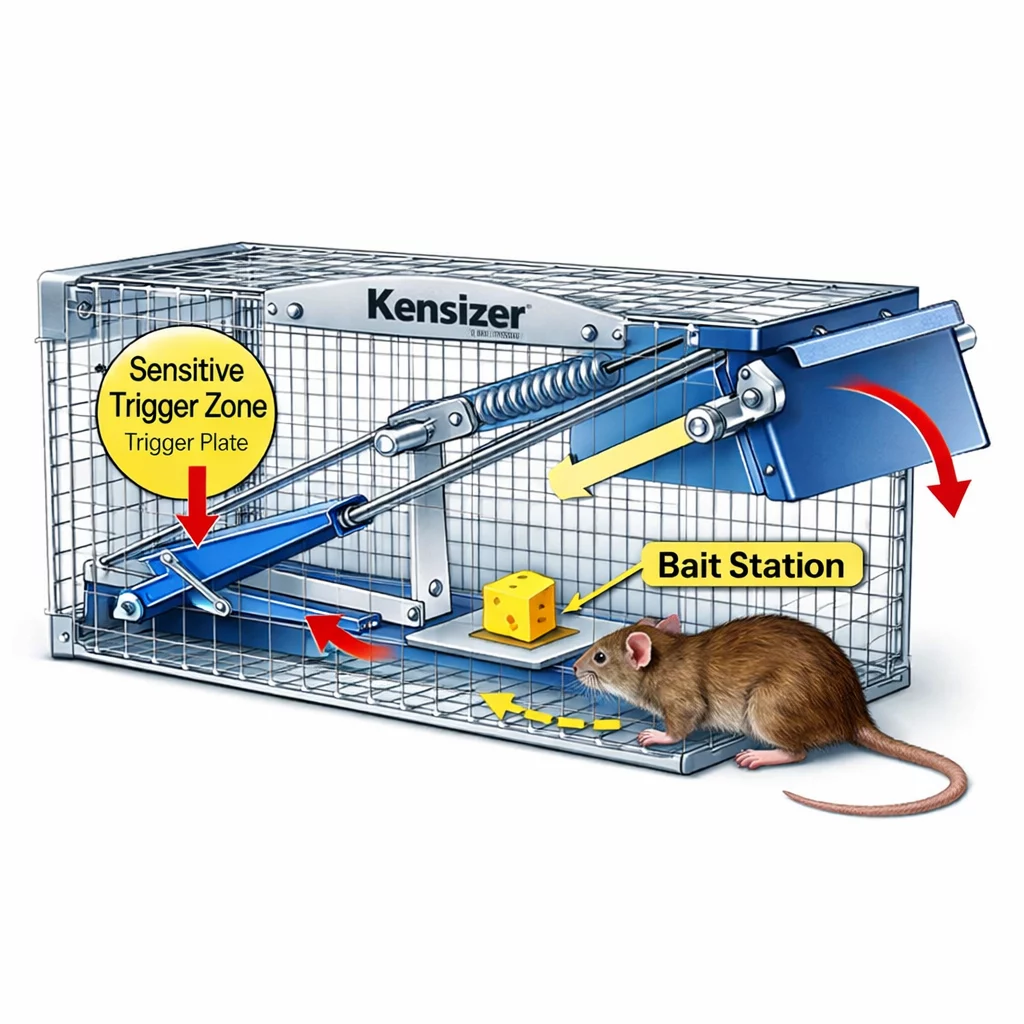
The Kensizer trap uses a pressure-sensitive trigger plate positioned inside the cage that activates when an animal steps on it while moving toward the bait. This plate connects to a spring-loaded door mechanism that snaps shut in a fraction of a second, faster than the rodent can retreat.
Here’s the step-by-step sequence:
- Bait placement: You place attractive food at the far end of the trap, past the trigger plate
- Door positioning: The entry door is held open by the trigger mechanism in its set position
- Rodent entry: The animal enters through the open door, attracted by the bait smell
- Trigger activation: As the rodent moves toward the bait, its weight presses down on the trigger plate
- Door closure: The trigger releases the spring mechanism, causing the door to swing shut instantly
- Secure containment: The door locks in the closed position and cannot be pushed open from inside
The trigger sensitivity is calibrated to respond to animals as small as mice (typically around 0.5 ounces) while avoiding false triggers from air currents or vibrations. This high sensitivity is crucial because rodents are naturally cautious—if they sense resistance or unusual movement, they’ll flee before fully entering.
The engineering advantage: The spring mechanism provides consistent closing force regardless of how gently the trigger is pressed. Even if a mouse barely touches the plate, the door still closes completely and quickly.
A common mistake is overloading the trap with too much bait near the entrance. This lets rodents grab food without fully entering and stepping on the trigger plate. Always place bait at the very back of the trap to ensure the animal must walk across the trigger.
What Materials and Construction Features Keep Rodents Contained?
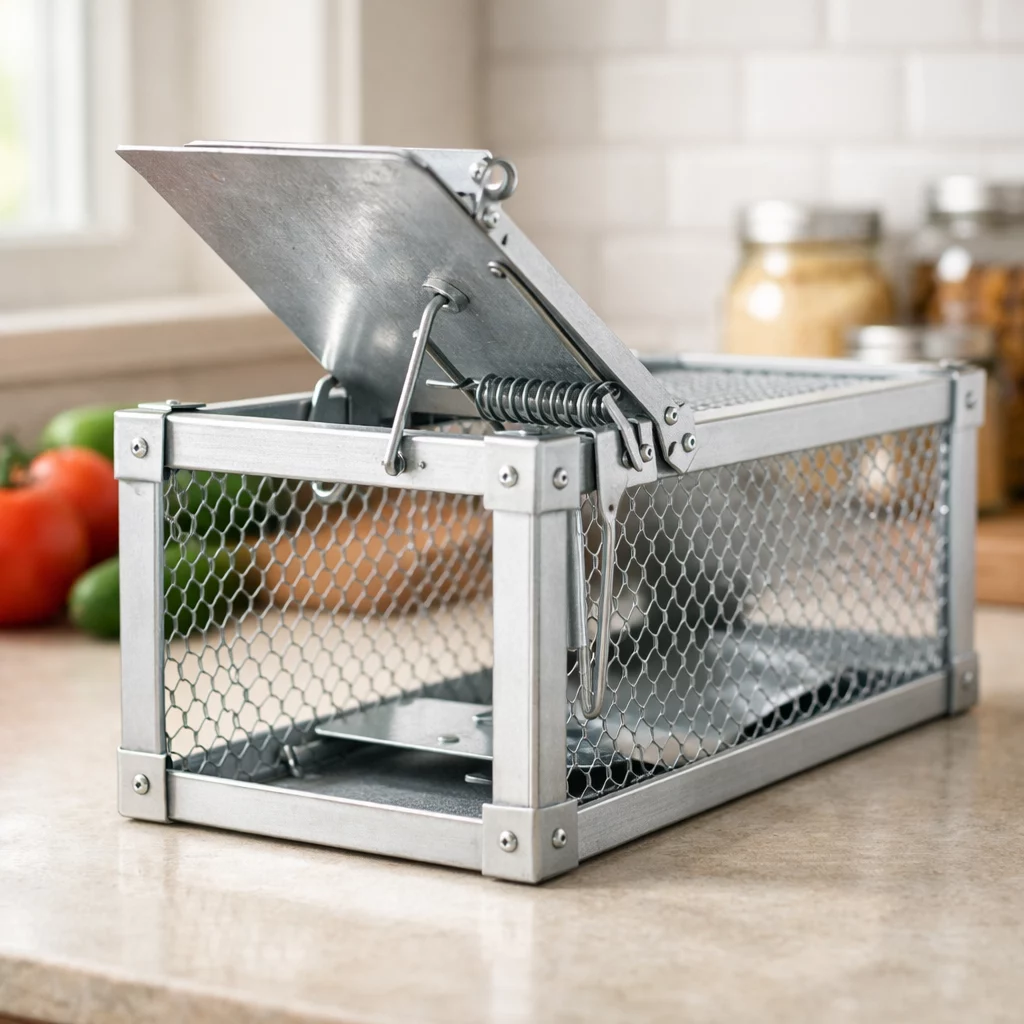
The Kensizer Humane Rat Trap is built with either lightweight aluminum or galvanized steel frames covered in fine wire mesh, creating a structure that’s strong enough to contain rodents but light enough for easy handling. The mesh spacing is small enough to prevent escape while allowing visibility and airflow.
Key construction elements:
- Frame material: Aluminum models weigh less (easier for quick checks and transport), while galvanized steel versions offer extra durability for outdoor use or larger rats
- Wire mesh gauge: Fine enough that rodents cannot squeeze through or chew through the metal wires
- Mesh spacing: Typically 0.5 inches or less, preventing even young mice from escaping
- Corner reinforcement: Welded or riveted joints at stress points prevent the trap from being pried apart
- Door seal: When closed, the door fits flush against the frame with minimal gaps
The wire mesh serves multiple purposes beyond containment. It allows you to see inside without opening the trap, which helps you quickly check if you’ve caught something during your morning routine. The openness also reduces panic in captured animals since they don’t feel completely enclosed in darkness.
Durability considerations: The galvanized coating on steel models prevents rust when the trap gets wet during outdoor releases or cleaning. Aluminum naturally resists corrosion but can dent more easily if dropped on hard surfaces.
Choose steel-frame models if you’re dealing with larger Norway rats (which can exceed 1 pound) or if you plan to leave traps outdoors. Aluminum works perfectly for indoor use with mice and smaller roof rats.
One edge case to watch: If you’re catching the same rodent repeatedly (it keeps returning after release), the animal may have learned to avoid the trigger. In this case, you’ll need to release it much farther from your home—at least half a mile for mice, a full mile for rats.
How Do You Set Up and Bait a Kensizer Humane Rat Trap?
Setting up the Kensizer trap takes about 30 seconds: place bait at the back of the cage, lift the door into the open position until it clicks into the set mechanism, then position the trap where you’ve seen rodent activity. The trap is now armed and ready.
Step-by-step setup process:
- Clean the trap if it’s been used before (removes previous animal scents that might deter new captures)
- Add bait at the far end, past the trigger plate—use peanut butter, chocolate, or seeds
- Set the door by lifting it up and back until you hear or feel it lock into the trigger mechanism
- Test the trigger by gently pressing the plate with a pencil to ensure the door snaps shut
- Position strategically along walls where you’ve seen droppings or gnaw marks
- Check regularly every 4-6 hours to avoid leaving captured animals stressed for too long
Best bait choices for different rodents:
- Rats: Peanut butter, bacon, dried fruit, or chocolate
- Mice: Peanut butter, chocolate chips, or seeds (sunflower or pumpkin)
- Chipmunks: Nuts, seeds, or apple slices
- Voles: Peanut butter mixed with oatmeal
The key to effective baiting is using small amounts of highly aromatic food. A dime-sized dollop of peanut butter works better than a large chunk of cheese because the strong smell travels farther through your home, attracting rodents from greater distances.
Placement strategy matters more than bait type. Rodents travel along walls and edges, not across open floor spaces. Position your trap perpendicular to the wall with the entrance facing the rodent’s travel path. Look for these signs of activity:
- Small dark droppings (rice-sized for mice, larger for rats)
- Gnaw marks on food packaging or baseboards
- Greasy rub marks along walls where their fur touches repeatedly
- Scratching sounds in walls or ceilings at night
A common mistake is placing traps in the middle of rooms or in areas with heavy foot traffic. Rodents avoid open spaces and human activity zones. The best locations are behind appliances, in pantries, along basement walls, or in attics.
Time-saving tip for busy moms: Set multiple traps at once in different high-activity areas. This increases your chances of quick capture and reduces the time spent on pest management.
What Should You Do After Catching a Rodent?
After catching a rodent in your Kensizer trap, cover the cage with a towel to calm the animal, transport it at least one mile from your home, then open the release door while standing behind the trap to let the rodent exit safely into a suitable outdoor habitat. Complete the process within a few hours of capture to minimize stress.
Immediate steps after discovering a capture:
- Stay calm: The animal is safely contained and cannot escape or bite you
- Cover the trap with a light towel or cloth to reduce the rodent’s stress and prevent panic
- Prepare for transport: Get your car keys and identify a release location before moving the trap
- Handle carefully: Carry the trap by the handle, keeping it level to avoid jostling the animal
- Drive to release site: Choose a wooded area, park, or field at least one mile away (preferably farther)
- Position for release: Place the trap on the ground with the door facing away from you
- Open the door: Use the release mechanism while standing behind or to the side of the trap
- Wait patiently: The rodent may take 30 seconds to several minutes to exit on its own
- Clean the trap: Wash with soap and water, then disinfect before resetting
Why distance matters: Rodents have strong homing instincts and excellent spatial memory. Mice can find their way back from up to half a mile, while rats can navigate back from even greater distances. Releasing too close to your home means you’ll likely catch the same animal again within days.
Suitable release locations:
- Public parks with wooded areas (check local regulations first)
- Rural fields away from other homes
- Forest edges with natural shelter
- Areas with natural food sources like berry bushes or seed-bearing plants
Avoid releasing near:
- Other people’s homes (you’re just transferring your problem)
- Areas without natural shelter (the rodent needs protection from predators)
- Busy roads or parking lots
- Agricultural areas where rodents damage crops
One important consideration for busy moms: If you catch a rodent during your morning routine but don’t have time for immediate release, keep the trap in a quiet, temperature-controlled area (like a garage) with a towel cover. Add a small piece of cucumber or apple for hydration if you can’t release within 4-6 hours. Never leave a captured animal in a hot car or direct sunlight.
Common mistake: Opening the door while standing directly in front of the trap. Startled rodents may run toward you when escaping. Always position yourself to the side or behind the trap when releasing.

How Effective Is the Kensizer Humane Rat Trap Compared to Other Methods?
The Kensizer Humane Rat Trap is highly effective when properly placed and baited, with success rates comparable to snap traps but without the killing mechanism. Effectiveness depends more on trap placement, bait selection, and checking frequency than on the trap type itself.
Comparison of common rodent control methods:
| Method | Effectiveness | Safety | Reusability | Cleanup Difficulty | Cost per Use |
|---|---|---|---|---|---|
| Kensizer Humane Trap | High | Very Safe | Unlimited | Easy (live release) | Low (reusable) |
| Snap Traps | High | Moderate Risk | Unlimited | Difficult (dead animal) | Low (reusable) |
| Glue Traps | Moderate | Safe | Single Use | Very Difficult | Moderate |
| Poison Baits | High | Dangerous | N/A | Very Difficult (hidden deaths) | Moderate |
| Electronic Traps | High | Safe | Unlimited | Moderate (dead animal) | High (batteries) |
Advantages of the Kensizer trap:
- No secondary poisoning risk: Safe for pets and wildlife that might eat poisoned rodents
- Immediate feedback: You can see when you’ve caught something without opening the trap
- Humane treatment: Aligns with values of compassion while still solving the pest problem
- Educational opportunity: Children can observe the captured animal safely before release
- No false triggers: Unlike some electronic traps, it won’t activate without an actual capture
Limitations to consider:
- Requires timely checking: You can’t leave it set for days like poison baits
- Release time commitment: You need to drive the animal away from your home
- Potential for repeat captures: The same rodent might return if not released far enough away
- Size limitations: Very large rats might avoid entering confined spaces
Choose the Kensizer trap if you have children or pets in the home, want to avoid handling dead animals, or have ethical concerns about killing. It’s particularly effective for single-rodent problems or small infestations (1-3 animals).
For severe infestations with dozens of rodents, you might need multiple traps or professional pest control services. However, even in these cases, humane traps can be part of a comprehensive strategy.
One edge case: If you’re dealing with extremely trap-shy rodents that have learned to avoid capture devices, try leaving the trap unset with bait for 2-3 days first. This lets them become comfortable entering before you activate the trigger mechanism.
What Are Common Problems and How Do You Troubleshoot Them?
The most common problem with the Kensizer Humane Rat Trap is catching nothing despite visible rodent activity, which usually means poor trap placement, unattractive bait, or the trap being set in an area the rodents don’t regularly travel. Troubleshooting involves systematic changes to location, bait type, and timing.
Problem: Trap remains empty after several days
Solutions:
- Move the trap to a different location along the rodent’s travel path (look for fresh droppings)
- Change bait types—try peanut butter if you used cheese, or vice versa
- Ensure the trap is positioned against walls, not in open floor space
- Check that the trigger mechanism is properly set and sensitive
- Leave the trap unset with bait for a day to let rodents become comfortable with it
Problem: Bait disappears but trap doesn’t trigger
Solutions:
- You’re likely dealing with a very lightweight mouse—increase trigger sensitivity if adjustable
- The bait is too close to the entrance—move it to the very back of the trap
- Rodents are reaching through the mesh from outside—place the trap flush against a wall
- The trigger plate may be stuck or corroded—clean and test the mechanism
Problem: Trap triggers but cage is empty
Solutions:
- The door is closing too slowly—check that the spring mechanism isn’t damaged or weak
- Very small mice are escaping through mesh gaps—this trap may be too large for juvenile mice
- The trigger is too sensitive and activating from vibrations—place on a more stable surface
- Rodents are triggering it from outside by reaching through—reposition away from accessible sides
Problem: Captured rodent appears distressed or injured
Solutions:
- Release more quickly—check traps every 4-6 hours maximum
- Cover the trap immediately with a towel to reduce stress
- Ensure the trap isn’t in direct sunlight or extreme temperatures
- Add a small piece of water-rich food (cucumber, apple) if release will be delayed
Problem: Same rodent keeps getting caught after release
Solutions:
- Release much farther away—at least one mile, preferably two or more
- Mark the rodent with a small dot of non-toxic paint before release to confirm it’s the same one
- Check for entry points in your home and seal them to prevent re-entry
- Consider that you might have multiple rodents that look similar
Maintenance issues:
If the trap stops working properly, check these components:
- Door hinge: Should move freely without sticking or squeaking
- Trigger plate: Should press down smoothly and return to position when released
- Spring mechanism: Should have consistent tension and snap the door shut quickly
- Wire mesh: Should have no gaps, tears, or loose sections
Cleaning and care: Wash the trap with hot soapy water after each use, then spray with a diluted bleach solution (1 part bleach to 10 parts water) to disinfect. Rinse thoroughly and dry completely before resetting. This removes scent markers that might deter new captures.
A common mistake is giving up too quickly. Rodents are naturally cautious and may take 2-3 days to investigate a new object in their territory. Patience and strategic adjustments usually lead to success.
How Do You Prevent Rodents from Returning After Release?
Preventing rodent return requires sealing all entry points into your home, eliminating food sources, and reducing habitat attractiveness—the trap only addresses individual animals, not the conditions that attracted them. A comprehensive prevention strategy is essential for long-term success.
Critical entry point sealing:
Rodents can squeeze through surprisingly small openings—mice need only a quarter-inch gap, while rats require half an inch. Inspect and seal these common entry points:
- Foundation cracks: Fill with concrete patch or steel wool covered with caulk
- Gaps around pipes and wires: Use expanding foam or copper mesh (rodents can’t chew through copper)
- Dryer vents: Install vent covers with small mesh screens
- Garage door seals: Replace worn weather stripping at the bottom
- Roof intersections: Check where different roof planes meet and seal gaps
- Attic vents: Ensure screens are intact with no tears or gaps
- Door sweeps: Install or replace on all exterior doors
Food source elimination:
Rodents enter homes seeking food and water. Remove these attractants:
- Store all pantry items in airtight glass or heavy plastic containers
- Clean up crumbs and spills immediately, especially behind appliances
- Don’t leave pet food out overnight
- Keep garbage in sealed containers and take it out regularly
- Clean under and behind stoves, refrigerators, and dishwashers
- Store birdseed in sealed metal containers (not in garages or sheds)
- Pick up fallen fruit from yard trees promptly
Habitat modification:
Make your property less attractive to rodents:
- Trim tree branches that touch your roof or walls (rats use these as highways)
- Keep firewood stacked at least 20 feet from your home and elevated off the ground
- Remove dense ground cover and ivy near your foundation
- Store items in your garage on shelves, not directly on the floor
- Reduce clutter in basements, attics, and storage areas where rodents can nest
- Fix leaky pipes and faucets that provide water sources
Time-saving strategy for busy moms: Focus on the kitchen first. Most rodent problems start in or near the kitchen where food is abundant. Spend 30 minutes sealing obvious gaps around pipes under the sink and storing food in sealed containers. This single action prevents most infestations.
When to call professionals: If you’ve caught more than five rodents in a month, you likely have a breeding population inside your walls. Professional pest control can identify hidden entry points and nesting areas that are difficult to find on your own.
One often-overlooked factor: Your neighbors’ pest control practices affect you. If they use poison, dying rodents may seek water and shelter in your home. Coordinate with neighbors when possible to use humane methods or at least seal your home thoroughly during their treatment periods.
Is the Kensizer Humane Rat Trap Worth the Investment?
The Kensizer Humane Rat Trap is worth the investment for families who want effective, safe, and reusable rodent control without the ethical concerns or safety risks of lethal methods. At a typical cost of $15-25 per trap, it pays for itself after just a few uses compared to disposable alternatives or professional pest control visits.
Cost comparison over one year:
- Kensizer Humane Trap: $20 initial cost + $0 per use = $20 total
- Snap Traps: $3 each × 10 uses = $30 (plus replacement when springs break)
- Glue Traps: $2 each × 10 uses = $20 (single-use, disposal costs)
- Poison Baits: $15 per box × 3 boxes = $45 (ongoing purchases needed)
- Professional Visit: $150-300 per visit (may require multiple visits)
Value factors beyond cost:
- Peace of mind: No worry about children or pets encountering dangerous traps
- Emotional comfort: Many people sleep better knowing they’re not killing animals
- Educational value: Teaching children about wildlife and compassionate problem-solving
- Versatility: Works for multiple rodent species and even escaped pet hamsters
- Durability: Quality construction lasts for years with proper care
Who benefits most from this trap:
- Families with young children who explore under sinks and in cabinets
- Pet owners worried about secondary poisoning
- People who are squeamish about handling dead animals
- Environmentally conscious households
- Anyone dealing with occasional rodent visitors (1-3 per year) rather than infestations
Who might need different solutions:
- Severe infestations requiring professional intervention
- People unable to check traps every 4-6 hours
- Those without transportation to release sites at least one mile away
- Situations requiring immediate elimination (like commercial food facilities)
Real-world perspective: Sarah, a single mom of two in suburban Chicago, shared her experience: “I tried snap traps first but my six-year-old found one with a dead mouse before I did. She was traumatized. The Kensizer trap let us catch the other two mice and release them together at a park. My daughter actually thought it was cool to see them run free. Worth every penny for avoiding that emotional mess.”
The trap’s reusability is its strongest value proposition. Unlike single-use options, you can catch dozens of rodents over several years with one trap. For busy single moms, the time saved by not shopping for replacement traps adds up significantly.
One consideration: If you live in an apartment or urban area without easy access to suitable release sites, the humane trap requires more effort than set-and-forget poison baits. However, many moms find the extra 20 minutes of drive time worthwhile for the safety and ethical benefits.
Frequently Asked Questions
How long can a rodent safely stay in the Kensizer trap?
A rodent can safely remain in the trap for up to 8 hours, but checking every 4-6 hours is ideal to minimize stress. Provide a small piece of water-rich food like cucumber if release will be delayed beyond 6 hours.
Can the trap catch multiple rodents at once?
No, the Kensizer trap is designed for single captures. Once the door closes after the first rodent enters, other rodents cannot enter. You’ll need multiple traps for simultaneous captures.
Will the trap work for squirrels or larger animals?
Standard Kensizer rat traps work for animals up to about 1 pound, which includes most rats but not squirrels. Larger squirrels require specifically designed squirrel traps with bigger dimensions.
How do you clean the trap between uses?
Wash with hot soapy water, spray with diluted bleach solution (1:10 ratio), rinse thoroughly, and dry completely. This removes scent markers and prevents disease transmission between captures.
Can you use the trap outdoors?
Yes, but choose galvanized steel models for outdoor durability and check the trap more frequently since outdoor temperatures can stress captured animals faster. Avoid direct sunlight and rain exposure.
What if the rodent won’t leave the trap during release?
Place the open trap on the ground and walk away for 5-10 minutes. Most rodents will exit once they sense no immediate threat. You can also gently tilt the trap to encourage movement toward the exit.
Is it legal to release captured rodents in public areas?
Laws vary by location. Some municipalities prohibit releasing rodents in public parks or on others’ property. Check local wildlife regulations or release on your own rural property if available.
How many traps do you need for a typical home?
Start with 2-3 traps placed in high-activity areas. For active infestations, use one trap per room where you’ve seen evidence of rodents. More traps mean faster resolution.
Will rodents learn to avoid the trap after seeing others caught?
Rodents don’t typically witness other captures since they’re solitary and nocturnal. However, trap-shy behavior can develop if a rodent escapes a poorly set trap. Proper setup prevents this.
Can you leave the trap set when you’re away for the weekend?
No, humane traps require checking every 4-8 hours. If you’ll be away, either don’t set the trap or arrange for someone to check it regularly. Leaving a captured animal for days is inhumane.
Does the trap work better at certain times of day?
Rodents are most active at dusk and dawn, but traps work 24/7 once set. Check traps first thing in the morning and again in the evening to catch animals during their active periods.
What should you do if you catch a pregnant rodent?
Release it immediately in a suitable habitat with natural shelter and food sources. Pregnant rodents need to establish nests quickly, so choose a location with dense vegetation or natural cavities.
Conclusion
The Kensizer Humane Rat Trap offers busy single moms an effective, safe, and ethical solution for managing rodent problems without the stress and safety concerns of lethal methods. Its simple trigger mechanism, durable wire mesh construction, and easy-release design make it practical for families who want pest control that aligns with their values.
Your action plan for success:
- Purchase 2-3 traps to cover multiple problem areas simultaneously
- Identify high-activity zones by looking for droppings, gnaw marks, and travel paths along walls
- Set traps strategically with attractive bait placed at the very back, positioned perpendicular to walls
- Check every 4-6 hours to ensure humane treatment and quick release
- Release at least one mile away in suitable habitat with natural shelter and food sources
- Seal entry points and eliminate food sources to prevent new rodents from entering
- Clean thoroughly between uses to remove scent markers and maintain effectiveness
The trap works best as part of a comprehensive approach that includes prevention. While it effectively captures individual rodents, long-term success requires addressing why they entered your home in the first place. Spend time sealing gaps, storing food properly, and reducing habitat attractiveness around your property.
For single moms juggling work, childcare, and household management, the Kensizer trap offers a set-it-and-check-it solution that doesn’t require professional help or dangerous chemicals. The initial time investment in proper setup pays dividends through quick captures and the peace of mind that comes from knowing your pest control method is safe for your children and pets.
Start with one trap in your highest-activity area tonight. Place a dollop of peanut butter at the back, set the door, and position it along the wall where you’ve seen the most evidence. Check it tomorrow morning. You’ll likely be surprised at how quickly this simple device solves your rodent problem—humanely and effectively.
SEO Meta Title: How Kensizer Humane Rat Trap Work: Complete Guide 2026