
Last updated: April 10, 2026
Quick Answer
Nitrile Gloves serve as essential protective equipment across medical facilities, automotive shops, food service operations, and home environments. They provide superior chemical resistance, puncture protection three times stronger than latex alternatives, and eliminate allergic reaction risks. For high-voltage electricians and other professionals, nitrile gloves offer critical barrier protection against oils, solvents, and contaminants while maintaining dexterity for precision work.
Key Takeaways
- Nitrile gloves reduce cross-contamination risks by up to 80% in medical settings and provide three times better puncture resistance than latex
- Automotive technicians rely on 6-10 mil thickness nitrile gloves for protection against diesel fuel, battery acid, and petroleum-based products
- Chemical resistance testing shows nitrile gloves defend against over 90% of tested chemicals including quaternary ammonium compounds and chlorine-based cleaners
- Food-service operations require FDA-compliant, powder-free nitrile gloves (2-4 mil thickness) for safe food handling
- Medical-grade nitrile gloves (4-6 mil) suit healthcare examinations, dental work, and tattoo artistry
- Industrial-grade variants (8+ mil) handle laboratory hazardous materials and heavy solvent exposure
- 95% of cleaning professionals consider nitrile gloves essential due to superior chemical resistance compared to latex or vinyl
- Latex-free composition eliminates allergic reactions for both workers and clients
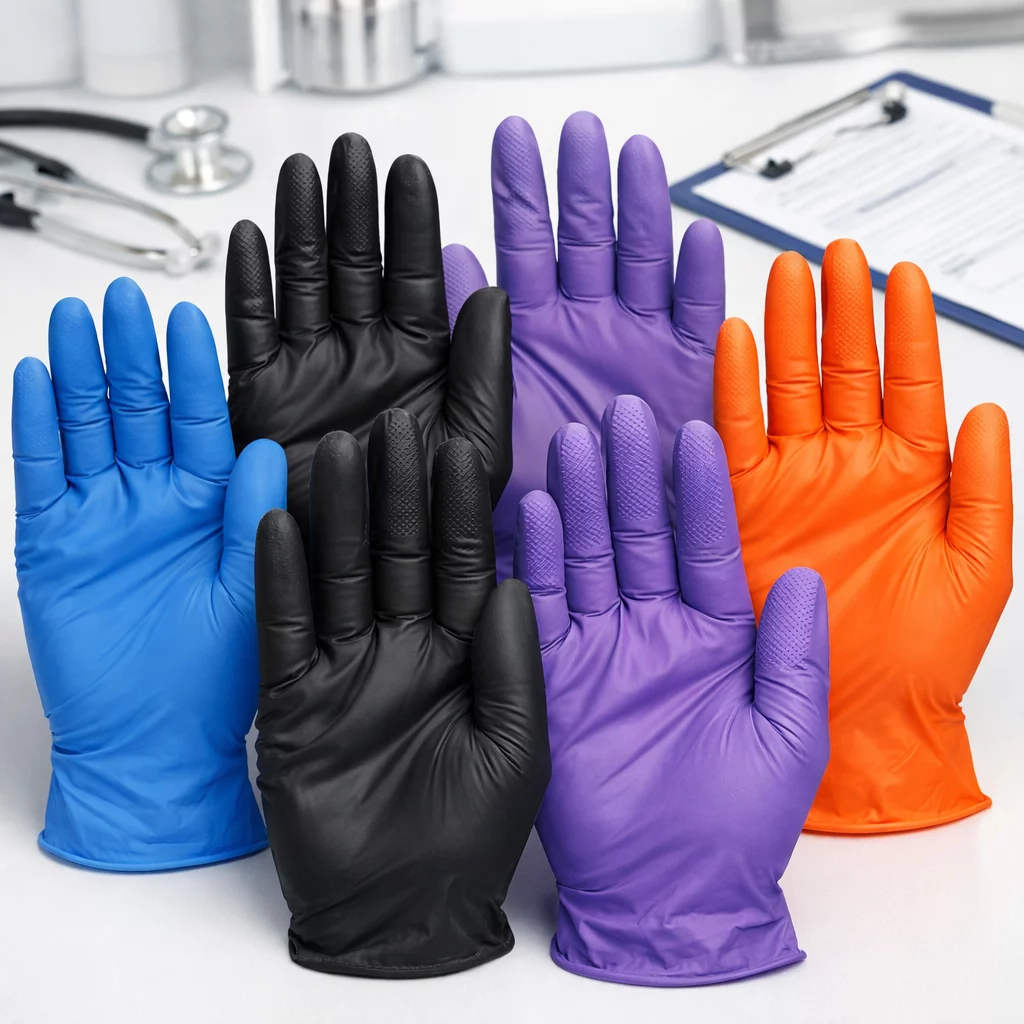
What Makes Nitrile Gloves Different from Other Protective Gloves?
Nitrile gloves are synthetic rubber gloves made from acrylonitrile and butadiene, offering superior puncture resistance and chemical protection compared to latex or vinyl alternatives. They eliminate latex allergy concerns while providing better durability for demanding work environments.
The material composition gives nitrile gloves distinct advantages:
- Puncture resistance: Three times stronger than latex, critical when handling sharp tools, electrical components, or metal edges
- Chemical barrier: Resists over 90% of tested chemicals including oils, solvents, acids, and cleaning agents
- Allergy-free: Contains no natural rubber latex proteins that trigger allergic reactions
- Durability: Maintains integrity during extended wear without tearing or degrading
- Tactile sensitivity: Thin variants (2-4 mil) provide excellent touch sensitivity for precision work
For high-voltage electricians, the chemical resistance matters when handling transformer oils, cable lubricants, and cleaning solvents used in electrical maintenance. The puncture resistance protects against sharp wire ends and metal burrs during panel work.
Choose nitrile over latex if: you or your clients have latex allergies, you work with petroleum-based products, or you need extended wear time without glove degradation. Choose latex instead if: you need maximum elasticity for surgical procedures and have confirmed no allergy concerns (rare in 2026 given widespread nitrile adoption).
Common mistake: Assuming all nitrile gloves offer the same protection. Thickness ranges from 2 mil (food service) to 15 mil (heavy industrial), and each application requires appropriate mil rating for adequate protection.
How Do Medical Professionals Use Nitrile Gloves?
Medical facilities use nitrile gloves as the primary barrier against bloodborne pathogens including hepatitis B, hepatitis C, and HIV, with 4-6 mil thickness recommended for examinations and dental procedures. These gloves reduce cross-contamination risks by up to 80% when changed between patients.
Healthcare applications include:
Patient examination and treatment:
- Physical examinations requiring tactile sensitivity
- Wound care and dressing changes
- Blood draws and IV insertions
- Dental procedures with exposure to saliva and blood
Infection control protocols:
- Handling contaminated instruments before sterilization
- Cleaning examination rooms between patients
- Managing biohazardous waste disposal
- Administering medications and injections
Specialized medical procedures:
- Surgical assistance (thicker 6-8 mil variants)
- Laboratory specimen handling
- Emergency response and first aid
- Chemotherapy drug preparation
Medical-grade nitrile gloves must meet EN 455 standards, ensuring quality benchmarks for water leak resistance, physical properties, and biocompatibility. The powder-free variants dominate medical use in 2026 because powder can interfere with wound healing and cause respiratory irritation.
Decision rule: Use 4-6 mil for standard examinations, 6-8 mil for surgical assistance, and change gloves between every patient contact to maintain infection control protocols.
Edge case: Some medical procedures require double-gloving (two pairs simultaneously) for added protection during high-risk surgeries or when handling particularly hazardous materials.
Why Do Automotive Technicians Prefer Nitrile Gloves?
Automotive professionals choose nitrile gloves with 6-10 mil thickness because they resist diesel fuel, engine oil, transmission fluid, battery acid, and petroleum-based products while maintaining grip on tools and components. The textured fingertips provide secure handling of oily parts.
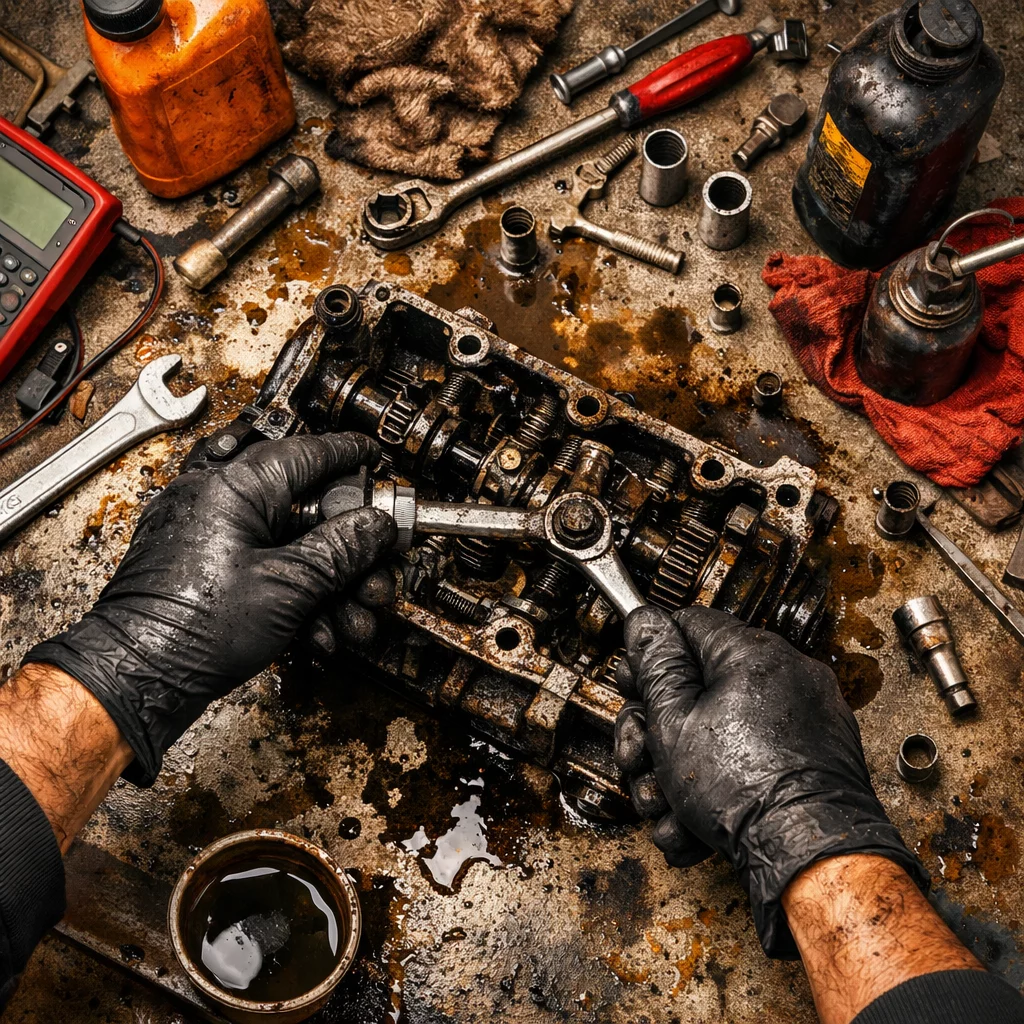
Automotive shop applications include:
Engine and mechanical work:
- Oil changes and fluid top-offs
- Brake system repairs with brake fluid exposure
- Transmission work with harsh chemicals
- Coolant system maintenance
Electrical system repairs:
- Battery terminal cleaning (acid exposure)
- Alternator and starter replacement
- Wiring harness repairs
- Diagnostic testing with electronic equipment
Body work and detailing:
- Paint preparation and application
- Solvent-based cleaner handling
- Adhesive and sealant application
- Interior cleaning with chemical products
The chemical resistance protects skin from dermatitis caused by repeated petroleum exposure. Many automotive technicians develop chronic skin conditions from years of unprotected chemical contact, making glove use essential for long-term health.
Choose 6-8 mil for: general mechanical work, oil changes, and routine maintenance. Choose 8-10 mil for: heavy chemical exposure, paint work, or extended wear during complex repairs.
Common mistake: Reusing disposable nitrile gloves between tasks. Once contaminated with oils or solvents, gloves should be discarded to prevent cross-contamination and skin exposure when removing them.
Real-world example: A transmission shop owner reported reducing hand dermatitis cases among technicians by 90% after implementing mandatory nitrile glove use for all fluid-related work. The 8 mil black nitrile gloves withstood the harsh transmission fluids while maintaining enough dexterity for precision bolt work.
What Role Do Nitrile Gloves Play in Food Service?
Food-service operations require FDA-compliant, powder-free nitrile gloves (2-4 mil thickness) that meet food-contact safety standards for professional kitchens, catering, and food processing. These gloves prevent cross-contamination between raw and cooked foods while protecting workers from cuts and burns.
Food handling applications include:
Commercial kitchen operations:
- Raw meat and poultry preparation
- Seafood handling and processing
- Vegetable cutting and preparation
- Plating and food assembly
Food safety protocols:
- Preventing bare-hand contact with ready-to-eat foods
- Changing gloves between handling raw and cooked items
- Protecting cuts or wounds on hands from food contact
- Maintaining hygiene during high-volume service
Specialized food tasks:
- Hot pepper handling (capsaicin protection)
- Deli meat slicing and sandwich preparation
- Bakery work with sticky doughs
- Catering service and buffet setup
Food-safe nitrile gloves must be labeled “FDA-compliant for food contact” to ensure they don’t leach chemicals into food. The powder-free requirement prevents powder contamination in food products and reduces allergic reactions among kitchen staff.
Decision rule: Change gloves every time you switch between raw and cooked foods, after touching non-food surfaces, or at least every four hours during continuous use.
Compliance note: Many jurisdictions require glove use when handling ready-to-eat foods. Check local health department regulations for specific requirements in your area.
How Do Cleaning Professionals Rely on Nitrile Gloves?
95% of cleaning professionals consider nitrile gloves essential because they resist quaternary ammonium compounds, chlorine-based cleaners, and aldehydes significantly better than latex or vinyl alternatives. The chemical resistance prevents skin damage from repeated exposure to harsh cleaning agents.
Cleaning industry applications include:
Commercial cleaning services:
- Restroom sanitization with bleach-based products
- Floor stripping and waxing with strong solvents
- Kitchen degreasing with alkaline cleaners
- Window cleaning with ammonia-based solutions
Residential cleaning tasks:
- Bathroom disinfection and mold removal
- Kitchen appliance cleaning
- Dusting and surface wiping
- Laundry handling with detergents
Specialized cleaning work:
- Crime scene and biohazard cleanup
- Post-construction cleaning with chemical residues
- Medical facility environmental services
- Industrial equipment cleaning
The 5-7 mil thickness range provides adequate chemical protection while maintaining flexibility for gripping cleaning tools and reaching tight spaces. Textured variants improve grip on wet surfaces and cleaning equipment handles.
Choose nitrile over vinyl for: any task involving strong chemicals, extended wear time, or need for puncture resistance. Vinyl gloves tear easily and provide minimal chemical protection.
Common mistake: Wearing the same pair of gloves throughout an entire cleaning job. Change gloves when moving between high-contamination areas (bathrooms) and low-contamination areas (offices) to prevent spreading pathogens.
Health impact: Cleaning professionals who switched from bare-hand cleaning or vinyl gloves to nitrile reported 70% fewer cases of contact dermatitis and chemical burns, according to occupational health surveys.
When Should Home Users Wear Nitrile Gloves?
Home users benefit from nitrile gloves during food preparation with hot peppers or raw meat, household cleaning with chemical products, DIY projects involving paints or adhesives, and personal care tasks requiring hygiene protection. The 3-5 mil thickness suits most home applications.
Household applications include:
Kitchen and food tasks:
- Handling jalapeños, habaneros, or other hot peppers
- Preparing raw chicken, beef, or fish
- Marinating meats with acidic ingredients
- Cleaning refrigerators and ovens
Home maintenance projects:
- Painting walls and furniture
- Applying wood stains and varnishes
- Using epoxy adhesives and sealants
- Handling fiberglass insulation
Cleaning and sanitation:
- Toilet and bathroom cleaning
- Handling pet waste
- Cleaning up bodily fluids
- Disposing of contaminated items
Personal care and first aid:
- Changing diapers
- Treating minor wounds
- Applying topical medications
- Hair dyeing and beauty treatments
For high-voltage electricians working on home projects, nitrile gloves protect against the same oils and solvents encountered professionally. The gloves also prevent skin oils from contaminating electrical connections during precision work.
Decision rule: Keep a box of 4-5 mil nitrile gloves in both the kitchen and garage/workshop. Use them any time you’re handling substances you wouldn’t want absorbed through your skin or under your fingernails.
Cost consideration: A box of 100 nitrile gloves costs $8-15 in 2026, making them affordable for regular home use. The protection against chemical burns and contamination far exceeds the minimal cost.
What Thickness of Nitrile Gloves Do Different Jobs Require?
Nitrile glove thickness ranges from 2 mil to 15 mil, with each application requiring specific mil ratings for adequate protection balanced against dexterity needs. Thicker gloves provide better chemical resistance and puncture protection but reduce tactile sensitivity.
Thickness Selection Guide
| Mil Rating | Applications | Protection Level | Dexterity |
|---|---|---|---|
| 2-4 mil | Food service, light cleaning, medical exams | Basic barrier protection | Excellent touch sensitivity |
| 4-6 mil | Healthcare, dental work, tattoo artistry | Moderate puncture resistance | Good dexterity |
| 6-8 mil | Automotive work, janitorial services | Strong chemical resistance | Adequate flexibility |
| 8-10 mil | Heavy automotive, industrial cleaning | High puncture resistance | Reduced sensitivity |
| 10-15 mil | Laboratory hazmat, solvent handling | Maximum chemical protection | Limited fine motor control |
For high-voltage electricians: 6-8 mil gloves balance protection against transformer oils and cable lubricants with enough dexterity for wire terminations and component handling. Thicker gloves interfere with precision work, while thinner gloves don’t provide adequate chemical resistance.
Measurement note: One mil equals 0.001 inches (0.0254 mm). An 8 mil glove measures 0.008 inches thick, providing substantial protection while remaining flexible.
Common mistake: Choosing gloves based solely on thickness without considering the specific chemicals or hazards in your work environment. A 4 mil glove with appropriate chemical resistance may outperform a 10 mil glove made from inferior material.
Testing tip: Before committing to a large purchase, order sample packs of different thicknesses to test with your actual work tasks. The right thickness feels protective without being cumbersome.
How Do Childcare Providers Use Nitrile Gloves?
Childcare facilities use nitrile gloves during nappy changes, food preparation, and first-aid scenarios to prevent disease transmission among vulnerable children. The National Day Nurseries Association emphasizes their role in infection control, with gloves meeting EN 455 standards for childcare settings.
Childcare applications include:
Hygiene and sanitation:
- Diaper changing and toilet training assistance
- Cleaning up vomit, blood, or other bodily fluids
- Sanitizing toys and play equipment
- Handling soiled clothing and linens
Food service for children:
- Preparing infant bottles and formula
- Serving meals to young children
- Handling food for children with allergies (preventing cross-contact)
- Cleaning high chairs and eating areas
Health and safety tasks:
- Administering first aid for cuts and scrapes
- Applying topical medications with parental consent
- Checking for head lice or skin conditions
- Handling tissues during cold and flu season
The 4-5 mil thickness provides adequate protection while maintaining the dexterity needed for fastening diapers, opening food containers, and performing delicate tasks with small children.
Protocol requirement: Change gloves between each child during diaper changes, after any contact with bodily fluids, and before food preparation. This prevents pathogen transmission between children.
Color coding strategy: Some childcare centers use different colored nitrile gloves for different tasks (blue for diaper changes, purple for food prep) to prevent cross-contamination through visual cues.
What Other Professional Applications Use Nitrile Gloves?
Beyond the major industries, nitrile gloves serve essential functions in tattoo artistry (4-6 mil medical-grade), laboratory work (8+ mil industrial-grade), salon services, veterinary care, and manufacturing operations requiring contamination control or chemical handling.
Tattoo and body art:
- Maintaining sterile field during procedures
- Protecting against bloodborne pathogen exposure
- Handling inks and cleaning solutions
- Preventing cross-contamination between clients
Laboratory and research:
- Handling hazardous chemicals and biological specimens
- Operating analytical equipment
- Preparing chemical solutions
- Disposing of contaminated materials
Salon and beauty services:
- Hair coloring and chemical treatments
- Nail services with acetone and acrylics
- Facial treatments and waxing
- Protecting against product allergies
Veterinary medicine:
- Animal examinations and treatments
- Surgical procedures
- Handling medications and vaccines
- Cleaning kennels and equipment
Manufacturing and assembly:
- Electronics assembly (preventing skin oils on components)
- Pharmaceutical production (contamination control)
- Paint and coating application
- Quality control inspection
For electricians in industrial settings: Nitrile gloves protect when handling cutting oils used in manufacturing equipment, cleaning solvents for electrical cabinets, and lubricants for motor maintenance. The gloves prevent skin absorption of industrial chemicals while maintaining dexterity for electrical work.
Specialized requirement: Electronics assembly often requires powder-free, low-particulate nitrile gloves to prevent contamination of sensitive components. Standard nitrile gloves may shed particles that interfere with circuit boards.
What Are the Limitations and Proper Use of Nitrile Gloves?
Nitrile gloves have limitations including degradation from ketones and aromatic hydrocarbons, no protection against electrical shock, limited heat resistance (typically 200°F maximum), and reduced effectiveness when torn or punctured. Proper donning and doffing techniques prevent contamination during removal.
Key Limitations
Chemical incompatibility:
- Ketones (acetone, MEK) cause rapid degradation
- Strong oxidizing acids damage nitrile material
- Aromatic hydrocarbons (benzene, toluene) penetrate gloves
- Always check chemical compatibility charts before use
Physical limitations:
- Not rated for electrical insulation (never rely on nitrile gloves for electrical protection)
- Heat resistance limited to 200°F (93°C) for brief contact
- Cold temperatures make gloves brittle and prone to cracking
- UV exposure degrades material over time
Usage constraints:
- Single-use design (disposable, not reusable)
- Effectiveness drops dramatically once punctured
- Extended wear beyond 4 hours increases contamination risk
- Improper removal can transfer contaminants to skin
Proper Donning and Doffing
Putting gloves on:
- Wash and dry hands thoroughly
- Check gloves for tears or defects
- Pull glove onto dominant hand first
- Use gloved hand to pull second glove on
- Adjust for comfort without touching contaminated surfaces
Removing gloves safely:
- Pinch outside of one glove near wrist
- Peel away from body, turning glove inside-out
- Hold removed glove in gloved hand
- Slide fingers under wrist of remaining glove
- Peel off, creating a bundle with first glove inside
- Dispose immediately and wash hands
Critical for electricians: Never assume nitrile gloves provide electrical insulation. Use properly rated electrical gloves for high-voltage work, and wear nitrile gloves only for chemical and contamination protection during non-energized tasks.
Storage tip: Keep nitrile gloves in a cool, dry location away from direct sunlight and ozone sources (electric motors, welders). Proper storage extends shelf life to 3-5 years.
How Do You Choose the Right Nitrile Gloves for Your Needs?
Choose nitrile gloves based on mil thickness for your hazard level (2-4 mil for light duty, 6-8 mil for moderate chemicals, 8+ mil for heavy industrial), required certifications (FDA for food, EN 455 for medical), and features like textured grip, extended cuff length, or powder-free composition.
Selection Criteria Checklist
Assess your hazards:
- Identify chemicals you’ll contact (check compatibility charts)
- Determine puncture risk level (sharp objects, rough surfaces)
- Consider duration of wear per task
- Evaluate dexterity requirements for your work
Choose appropriate specifications:
- Mil thickness matching hazard level
- Powder-free for food service or medical use
- Textured fingertips for wet or oily conditions
- Extended cuff (12+ inches) for forearm protection
- Color preference (black hides stains, blue shows contamination)
Verify certifications:
- FDA compliance for food contact
- EN 455 or ASTM D6319 for medical use
- AQL (Acceptable Quality Level) rating of 1.5 or lower
- Chemical resistance testing documentation
Consider practical factors:
- Sizing accuracy (measure hand circumference)
- Ambidextrous vs. hand-specific design
- Packaging quantity (boxes of 50, 100, or 200)
- Cost per glove for your usage volume
For high-voltage electricians specifically: Look for 6-8 mil thickness, textured grip, and resistance to petroleum-based products. Black nitrile gloves hide the inevitable stains from electrical work while maintaining professional appearance. Extended cuff versions protect forearms when reaching into electrical cabinets.
Sizing guide: Measure around the widest part of your palm (excluding thumb). Small: 7-8 inches, Medium: 8-9 inches, Large: 9-10 inches, XL: 10-11 inches. Proper fit prevents tears and maintains dexterity.
Budget consideration: Premium nitrile gloves cost $0.15-0.30 per glove in 2026, while economy versions run $0.08-0.12. For professional use, the premium versions justify their cost through better durability and protection.
Frequently Asked Questions
Can nitrile gloves be reused? No, nitrile gloves are designed for single-use disposal. Once removed, they’re contaminated and lose their protective integrity. Reusing gloves transfers contaminants and increases puncture risk from material fatigue.
How long can you safely wear nitrile gloves? Change nitrile gloves every 2-4 hours during continuous use, immediately after contamination, when switching between tasks, or if they become torn or punctured. Extended wear increases contamination risk and reduces barrier effectiveness.
Are nitrile gloves safe for people with latex allergies? Yes, nitrile gloves contain no natural rubber latex proteins and are the recommended alternative for individuals with latex allergies. They provide comparable or superior protection without allergic reaction risks.
Do nitrile gloves protect against electricity? No, nitrile gloves provide no electrical insulation and should never be used as electrical protective equipment. Use properly rated electrical gloves for high-voltage work, and wear nitrile gloves only for chemical protection during de-energized tasks.
What chemicals damage nitrile gloves? Ketones (acetone, MEK), aromatic hydrocarbons (benzene, toluene), and strong oxidizing acids degrade nitrile material. Always consult chemical compatibility charts before using nitrile gloves with unfamiliar substances.
Can you wear nitrile gloves for extended periods? While possible, extended wear beyond 4 hours increases moisture buildup, skin irritation, and contamination risk. Take breaks to remove gloves, wash hands, and allow skin to breathe during long work sessions.
What’s the difference between medical-grade and industrial-grade nitrile gloves? Medical-grade gloves meet stricter quality standards (EN 455, ASTM D6319) with lower defect rates (AQL 1.5 or less) and biocompatibility testing. Industrial-grade gloves prioritize chemical resistance and durability over medical sterility requirements.
How should nitrile gloves fit? Properly fitted nitrile gloves feel snug without restricting movement, with no excess material at fingertips. They should pull on easily but not slide around during use. Too tight causes tears; too loose reduces dexterity.
Are colored nitrile gloves different from blue ones? Color differences are primarily aesthetic, though some facilities use color coding for task separation (blue for general use, purple for food prep, black for automotive work). Material properties remain consistent across colors from the same manufacturer.
Can nitrile gloves go in the recycling bin? No, used nitrile gloves are contaminated and belong in regular trash or biohazard waste depending on what they contacted. Some specialized programs recycle unused nitrile gloves, but this remains uncommon in 2026.
Do nitrile gloves expire? Nitrile gloves have a shelf life of 3-5 years when stored properly in cool, dry conditions away from sunlight and ozone. Expired gloves become brittle and lose elasticity, reducing their protective effectiveness.
What size nitrile gloves should I buy? Measure around the widest part of your palm excluding the thumb. Small fits 7-8 inches, Medium 8-9 inches, Large 9-10 inches, and XL 10-11 inches. When between sizes, choose the larger size for comfort.
Conclusion
Nitrile gloves have become indispensable protective equipment across medical facilities, automotive shops, food service operations, cleaning services, childcare centers, and home environments in 2026. Their superior puncture resistance, broad chemical compatibility, and latex-free composition make them the preferred choice for professionals and home users alike.
For high-voltage electricians, nitrile gloves provide essential protection against the oils, solvents, and contaminants encountered during electrical maintenance and installation work. The 6-8 mil thickness range offers the right balance of chemical resistance and dexterity for precision electrical tasks.
Take Action Now
Immediate steps:
- Assess your current glove inventory and identify gaps in protection
- Measure your hand size and order properly fitted nitrile gloves
- Select appropriate mil thickness for your primary work tasks
- Verify chemical compatibility for substances you handle regularly
Long-term practices:
- Establish glove-changing protocols for different tasks
- Train team members on proper donning and doffing techniques
- Monitor for signs of chemical breakthrough or material degradation
- Keep adequate inventory to prevent running out during critical work
Professional development:
- Review chemical compatibility charts for your work environment
- Stay updated on industry-specific glove requirements and standards
- Document any skin reactions or glove failures to improve selection
- Consider specialized gloves for unique hazards in your field
The small investment in quality nitrile gloves prevents costly skin damage, reduces contamination risks, and maintains professional hygiene standards. Whether you’re terminating high-voltage connections, servicing automotive systems, or handling household chemicals, the right nitrile gloves protect your most valuable tools—your hands.