A falling wrench from 20 feet up can strike your head with over 1,000 pounds of force. The only thing standing between that impact and a life-changing injury is the material of hardhat outer shells—specifically, the impact-resistant polymers engineered to absorb and deflect that energy. These specialized plastics aren’t just protective gear; they’re the result of decades of material science designed to keep construction workers safe on job sites where overhead hazards are a daily reality.
Key Takeaways
- Impact-resistant polymers like HDPE, ABS, and polycarbonate form the outer shell of hardhats, each offering different protection levels and durability characteristics
- The material of hardhat shells determines how well they absorb impact energy, resist penetration, and maintain structural integrity under stress
- High-Density Polyethylene (HDPE) dominates construction sites because it balances cost, impact resistance, and weather durability
- Polycarbonate hardhats provide superior impact resistance but cost 40-60% more than standard HDPE models
- Temperature extremes affect polymer performance—HDPE becomes brittle below 0°F while ABS maintains flexibility in cold conditions
- Modern polymer formulations include UV stabilizers that extend hardhat lifespan from 2-3 years to 5+ years in outdoor environments
- The material choice directly impacts whether a hardhat meets Type I (top impact) or Type II (side impact) safety classifications
- Regular inspection of the outer shell for cracks, dents, or discoloration indicates when polymer degradation requires replacement
What Makes Impact-Resistant Polymers Essential for Hardhat Safety?
Impact-resistant polymers are the foundation of hardhat protection because they convert kinetic energy from falling objects into deformation and heat, preventing that force from reaching your skull. When a hammer or piece of debris strikes a hardhat, the polymer shell spreads the impact across a larger surface area while the material itself flexes and absorbs energy.
The material of hardhat construction determines three critical safety factors:
- Energy absorption capacity: How much force the shell can dissipate before transferring impact to your head
- Penetration resistance: The shell’s ability to prevent sharp objects from piercing through
- Structural integrity: Whether the material maintains protective properties after initial impacts or environmental exposure
Think of it this way: a hardhat made from standard rigid plastic might crack on first impact, leaving you unprotected for the rest of the day. Impact-resistant polymers are engineered to handle multiple smaller impacts and maintain their protective structure even after absorbing significant force.
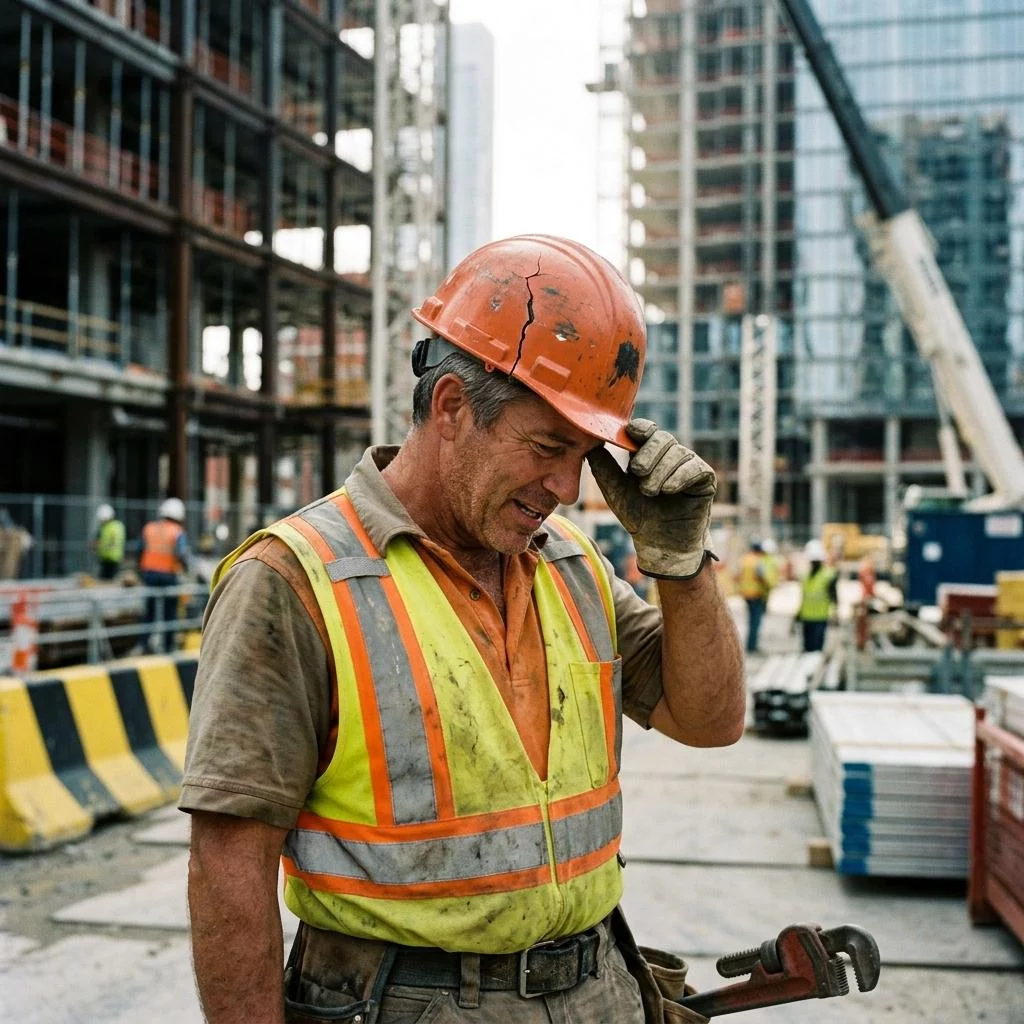
Construction foreman Mike Torres learned this firsthand when a dropped pipe wrench struck his HDPE hardhat during a high-rise project. “The hat cracked, but it held together,” he recalls. “I had a headache, but I walked away. My old cheap hardhat from years ago would’ve shattered completely.”
Which Polymers Are Used in Hardhat Outer Shells?
Three primary polymers dominate hardhat manufacturing, each with distinct performance characteristics that make them suitable for different work environments.
High-Density Polyethylene (HDPE)
HDPE is the workhorse material found in most construction hardhats. This thermoplastic polymer offers excellent impact resistance at temperatures between 20°F and 120°F, making it suitable for most job sites. HDPE hardhats typically cost between $15-$35 and provide reliable protection for 2-5 years depending on UV exposure and usage conditions.
Choose HDPE if: You need affordable, reliable protection for general construction work in moderate climates.
Acrylonitrile Butadiene Styrene (ABS)
ABS provides superior low-temperature performance compared to HDPE, maintaining flexibility and impact resistance down to -20°F. This makes ABS the preferred material of hardhat shells for cold-weather construction, oil field work, and winter outdoor projects. ABS also offers better surface finish and can be molded into more complex shapes.
Choose ABS if: You work in cold climates or need enhanced impact resistance in freezing conditions.
Polycarbonate
Polycarbonate represents the premium tier of hardhat materials, offering impact resistance up to 10 times greater than HDPE. These hardhats excel in high-risk environments where falling tools or heavy debris pose constant threats. Polycarbonate also provides excellent electrical insulation properties for electrical work.
Choose polycarbonate if: Your work involves extreme impact hazards, electrical risks, or you need maximum protection regardless of cost.
How Do Impact-Resistant Polymers Actually Protect Your Head?
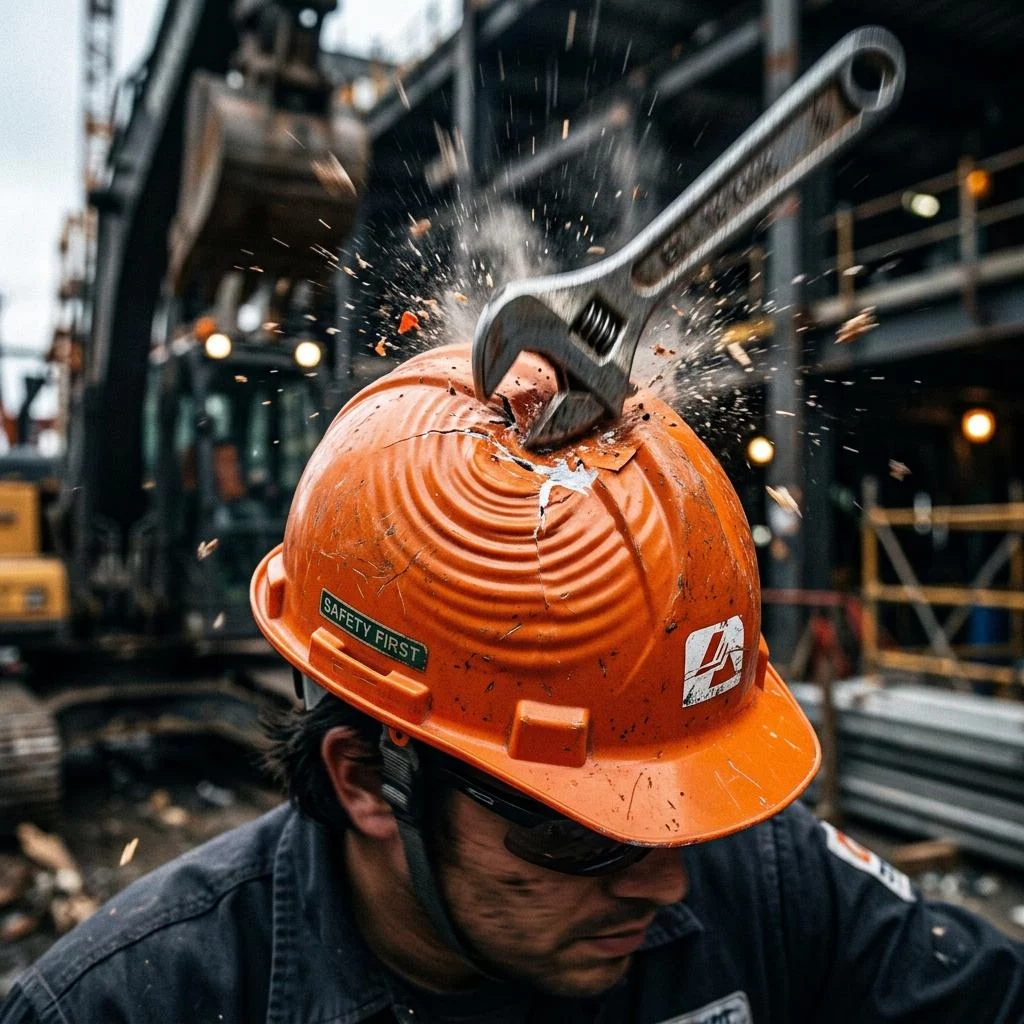
The protection mechanism involves a sophisticated interplay between material properties and hardhat design. When an object strikes the outer shell, the impact-resistant polymer responds in three phases:
Phase 1: Initial Contact and Load Distribution
The curved shape of the hardhat shell deflects glancing blows while the polymer’s surface begins spreading the impact force across a wider area. This geometric advantage reduces the concentrated pressure at the strike point.
Phase 2: Energy Absorption Through Deformation
The polymer material flexes and deforms, converting kinetic energy into heat and structural change. Impact-resistant polymers are engineered with specific molecular structures that allow controlled deformation without catastrophic failure (shattering).
Phase 3: Suspension System Transfer
The remaining energy transfers through the shell to the internal suspension system, which provides the final layer of protection by maintaining clearance between the shell and your head. The material of hardhat shells must be rigid enough to maintain this critical spacing while flexible enough to absorb energy.
A common mistake workers make is assuming any crack means the hardhat failed. In reality, visible cracking often indicates the polymer successfully absorbed significant energy. However, any cracked hardhat should be replaced immediately because its structural integrity is compromised for future impacts.
What Role Do UV Stabilizers Play in Polymer Performance?
Ultraviolet radiation from sunlight gradually breaks down polymer chains, causing hardhat shells to become brittle and lose impact resistance. This degradation happens invisibly—your hardhat might look fine but offer significantly reduced protection after extended sun exposure.
Modern impact-resistant polymers incorporate UV stabilizer additives that absorb or reflect UV radiation before it damages the polymer structure. These stabilizers can extend outdoor hardhat lifespan from 2-3 years to 5+ years, representing a significant safety and cost improvement.
Visual indicators of UV degradation include:
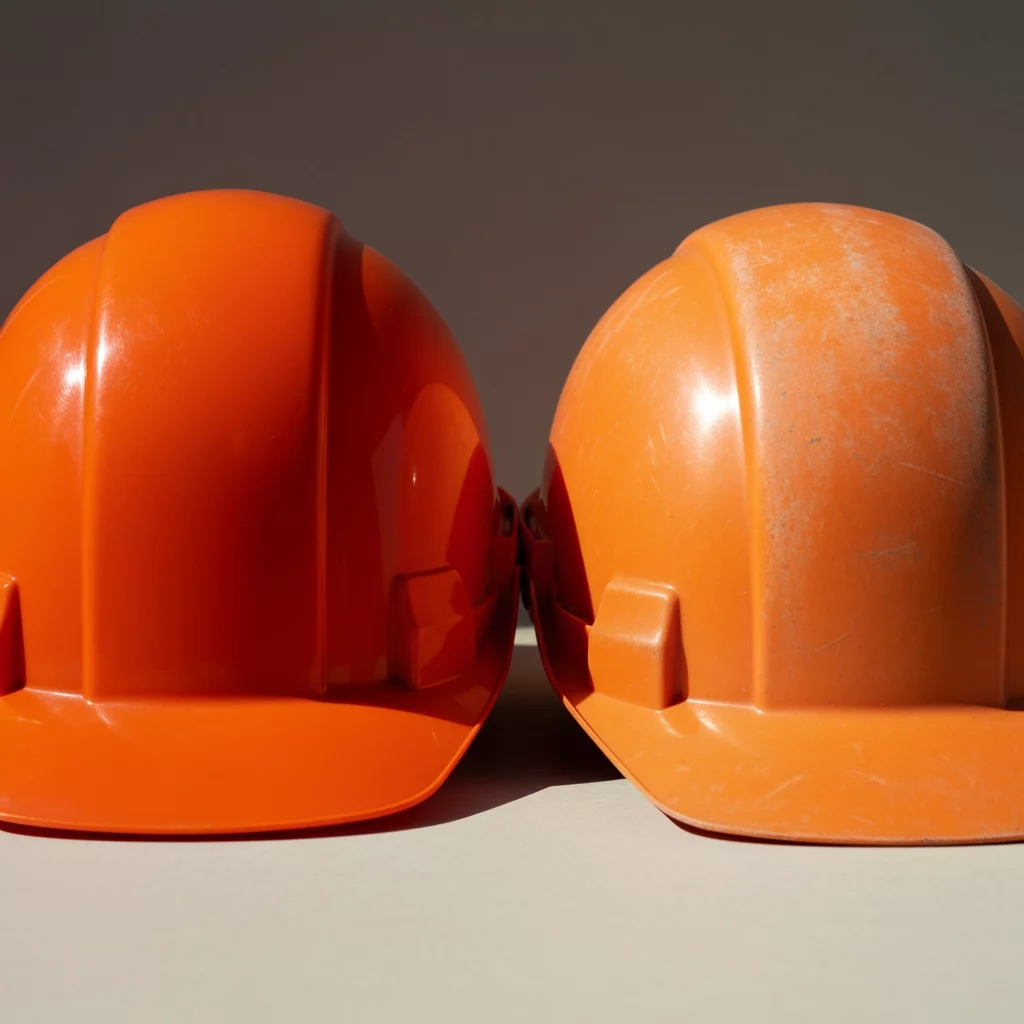
- Fading or color change (especially noticeable on bright-colored hardhats)
- Chalky or rough surface texture
- Increased brittleness (the shell feels less flexible when squeezed)
- Loss of surface gloss
The material of hardhat shells without adequate UV stabilization will fail the “flex test”—when you squeeze the sides together, degraded polymer will crack or show stress marks. Fresh, properly stabilized polymer springs back without damage.
Outdoor workers should inspect hardhats every 3-6 months for UV damage signs, while indoor workers can typically extend inspection intervals to 6-12 months. Replace any hardhat showing degradation indicators regardless of age.
How Does Temperature Affect Hardhat Material Performance?
Temperature extremes challenge polymer performance in ways that directly impact your safety. Each polymer type has a specific temperature range where it maintains optimal impact resistance.
| Polymer Type | Optimal Range | Cold Limit | Heat Limit | Performance Notes |
|---|---|---|---|---|
| HDPE | 20°F to 120°F | 0°F | 140°F | Becomes brittle in extreme cold |
| ABS | -20°F to 110°F | -40°F | 130°F | Best cold-weather performance |
| Polycarbonate | -40°F to 250°F | -60°F | 280°F | Widest temperature tolerance |
Cold weather concerns: When polymers get too cold, their molecular structure becomes rigid and loses the flexibility needed to absorb impact energy. A hardhat that would normally protect you from a falling tool might crack like glass in sub-zero temperatures if made from the wrong material.
Hot weather concerns: Excessive heat softens polymers, reducing their ability to maintain structural shape under impact. A softened hardhat shell might collapse inward during impact rather than deflecting force outward.
Choose your material of hardhat based on the temperature extremes you’ll encounter. If you work in varying climates, polycarbonate’s wider tolerance range provides year-round reliability despite higher initial cost.
What’s the Difference Between Type I and Type II Hardhat Materials?
Safety classifications relate directly to how impact-resistant polymers are engineered and shaped. Type I hardhats protect against vertical impacts to the top of the head, while Type II hardhats provide additional side and front impact protection.
Type I construction uses standard polymer thickness and focuses protection on the crown area. The material of hardhat shells in Type I models typically ranges from 2-3mm thick at the crown, with reinforcement ribs molded into the design for added strength.
Type II construction requires enhanced polymer coverage extending down the sides and front, with thicker material (3-4mm) in impact zones. This demands polymers that maintain impact resistance across larger surface areas without becoming too heavy for comfortable all-day wear.
The polymer choice affects which classification a hardhat can achieve. Polycarbonate’s superior impact resistance makes it easier to meet Type II requirements while keeping weight manageable. HDPE Type II hardhats require more material and reinforcement, resulting in heavier designs.
Common mistake: Assuming all hardhats provide the same protection. Check the label inside your hardhat for Type I or Type II designation, and choose based on your specific hazards. Electrical workers near overhead lines need Type I protection, while workers near swing radius hazards (cranes, excavators) benefit from Type II side impact protection.
How Long Do Impact-Resistant Polymers Maintain Their Protective Properties?
Polymer degradation happens gradually through multiple mechanisms, making replacement timing critical for maintaining protection. The material of hardhat shells doesn’t have an expiration date stamped on it, but manufacturers typically recommend replacement every 2-5 years depending on usage conditions.
Degradation factors that reduce polymer performance:
- UV exposure: Outdoor hardhats degrade 2-3 times faster than indoor models
- Chemical exposure: Solvents, oils, and cleaning chemicals accelerate polymer breakdown
- Temperature cycling: Repeated heating and cooling stresses polymer structure
- Physical impacts: Each impact creates micro-fractures that accumulate over time
- Storage conditions: Hardhats stored in hot vehicles or direct sunlight age faster
Replacement decision rules:
- Replace immediately if the shell shows any cracks, dents, or punctures
- Replace after any significant impact, even if no visible damage appears
- Replace when the shell shows UV degradation signs (chalking, fading, brittleness)
- Replace every 2 years for outdoor use, 5 years for indoor use (even without visible damage)
- Replace if the manufacturing date (molded into the shell) exceeds 5 years
The manufacturing date appears as a molded stamp inside the shell, typically showing the month and year. For example, “3/24” indicates March 2024 manufacture. Some manufacturers use a clock-face design with the month indicated by an arrow.
What Advanced Polymer Technologies Are Improving Hardhat Safety?
Material science continues advancing impact-resistant polymer formulations, bringing new capabilities to hardhat protection in 2026.
Carbon fiber reinforced polymers are gaining adoption in premium hardhats, offering exceptional strength-to-weight ratios. These composite materials embed carbon fiber strands within polymer matrices, creating shells that weigh 20-30% less than traditional HDPE while providing superior impact resistance. The trade-off is cost—carbon fiber hardhats typically run $150-$300 compared to $15-$35 for standard models.
Multi-layer polymer construction uses different materials in layers to optimize specific properties. An outer layer might prioritize UV resistance and hardness, while an inner layer focuses on impact energy absorption. This approach allows engineers to fine-tune the material of hardhat performance beyond what single-polymer designs achieve.
Self-healing polymers represent emerging technology where the material can repair minor surface damage through chemical reactions triggered by impact or heat. While still in development for hardhat applications, these materials could extend service life and maintain protection longer.
Graphene-enhanced polymers incorporate graphene nanoparticles to improve impact resistance, thermal stability, and UV resistance simultaneously. Early commercial applications show promising results, though widespread adoption awaits cost reduction and long-term field testing.
For most construction workers in 2026, traditional HDPE and ABS hardhats still provide excellent protection at reasonable cost. Advanced materials make sense when your work involves extreme hazards, temperature conditions, or when weight reduction significantly improves comfort and compliance during long shifts.
How Should You Maintain Hardhat Materials for Maximum Protection?
Proper care extends polymer lifespan and maintains protective properties. The material of hardhat shells responds well to simple maintenance practices that most workers overlook.
Cleaning best practices:
- Use mild soap and warm water only—harsh chemicals degrade polymers
- Avoid petroleum-based cleaners, solvents, or abrasive scrubbers
- Rinse thoroughly to remove all soap residue
- Air dry completely before storage (moisture trapped inside promotes mold)
- Never use paint, stickers, or adhesives that might hide damage or contain solvents
Storage recommendations:
- Store hardhats away from direct sunlight and heat sources
- Avoid leaving hardhats in vehicles where temperatures exceed 140°F
- Don’t stack heavy objects on hardhats (causes deformation)
- Store in cool, dry locations between 50-80°F when possible
- Keep away from chemicals, solvents, and petroleum products
Inspection routine:
Squeeze the shell from both sides—it should flex slightly then return to shape without cracking or showing stress marks. Check the entire surface for cracks, especially around suspension mounting points where stress concentrates. Look for color fading, chalky texture, or loss of gloss indicating UV degradation.
A quick weekly inspection takes 30 seconds and could save your life. Make it part of your Monday morning routine before heading to the job site.
Comparison: Choosing the Right Hardhat Material for Your Work
| Work Environment | Recommended Material | Key Advantage | Typical Cost | Replacement Interval |
|---|---|---|---|---|
| General construction (moderate climate) | HDPE | Best cost-to-protection ratio | $15-$35 | 2-3 years |
| Cold weather/winter work | ABS | Maintains flexibility below freezing | $25-$45 | 3-4 years |
| High-impact hazards | Polycarbonate | 10x impact resistance vs HDPE | $50-$100 | 3-5 years |
| Electrical work | Polycarbonate (Class E or G) | Superior electrical insulation | $60-$120 | 3-5 years |
| Extreme environments | Carbon fiber composite | Lightest weight, highest strength | $150-$300 | 5+ years |
| Indoor warehousing | HDPE | Adequate protection, minimal UV exposure | $15-$30 | 4-5 years |
Frequently Asked Questions
Can you repair a cracked hardhat shell?
No. Any crack compromises the structural integrity of impact-resistant polymers, making the hardhat unreliable for protection. Replace cracked hardhats immediately regardless of crack size or location.
Why do hardhats have expiration dates if they look fine?
Polymer degradation happens at the molecular level before visible signs appear. UV exposure, temperature cycling, and chemical exposure weaken the material’s impact resistance even when the shell looks undamaged.
Does hardhat color affect material performance?
Color itself doesn’t change impact resistance, but darker colors absorb more heat in sunlight, potentially accelerating polymer degradation. Light colors reflect heat and may extend service life slightly in hot, sunny conditions.
Can you paint or customize hardhat shells?
Painting hardhats is not recommended because paint solvents can degrade impact-resistant polymers and paint layers may hide cracks or damage during inspections. Use adhesive-backed reflective tape designed specifically for hardhats if customization is needed.
What’s the difference between Class E, G, and C hardhats?
These electrical classifications relate to the polymer’s dielectric properties. Class E (Electrical) protects against up to 20,000 volts, Class G (General) up to 2,200 volts, and Class C (Conductive) provides no electrical protection. The material of hardhat shells must meet specific electrical resistance standards for E and G ratings.
How do you know if your hardhat material is still good?
Perform the flex test by squeezing sides together—the shell should flex slightly without cracking. Check for color fading, chalky texture, or brittleness. If the manufacturing date exceeds 5 years or you see any degradation signs, replace the hardhat.
Are more expensive hardhat materials worth the cost?
For high-risk environments with frequent overhead hazards or extreme temperatures, premium materials like polycarbonate provide measurably better protection. For general construction in moderate conditions, quality HDPE hardhats offer excellent protection at lower cost.
Can cold weather crack your hardhat?
HDPE hardhats can become brittle and crack in temperatures below 0°F. If you work in cold climates, choose ABS or polycarbonate materials that maintain flexibility and impact resistance in freezing conditions.
What happens to hardhat materials in extreme heat?
Excessive heat (above 140°F for HDPE) softens polymers, reducing their ability to maintain shape under impact. Never store hardhats in hot vehicles or direct sunlight, as repeated heat exposure accelerates degradation.
Do impact-resistant polymers protect against electrical shock?
Only hardhats specifically rated Class E or G provide electrical protection. The polymer must be formulated and tested to meet dielectric standards. Standard construction hardhats may not offer electrical insulation even if made from similar-looking materials.
How many impacts can a hardhat withstand?
Impact-resistant polymers are designed primarily for single significant impacts. While they may survive multiple minor bumps, any substantial impact creates internal damage that reduces future protection. Replace hardhats after any significant impact event.
Why do some hardhats feel heavier than others?
Weight differences come from the material of hardhat shells (polycarbonate is denser than HDPE), shell thickness (Type II hardhats use more material), and additional features like integrated visors or ear protection mounting points.
Conclusion
The material of hardhat outer shells represents the critical first line of defense against one of construction’s most serious hazards—falling objects and overhead impacts. Impact-resistant polymers like HDPE, ABS, and polycarbonate are engineered specifically to absorb and deflect energy that would otherwise cause severe head injuries or fatalities.
Understanding these materials helps you make informed decisions about which hardhat provides appropriate protection for your specific work environment. HDPE offers reliable, cost-effective protection for general construction work. ABS excels in cold weather conditions. Polycarbonate delivers maximum impact resistance for high-risk environments. Each material has distinct performance characteristics that match different job site demands.
Take these actions to maximize your hardhat protection:
- Check your current hardhat’s manufacturing date and replace if it exceeds 5 years
- Inspect your hardhat weekly for cracks, fading, or brittleness indicating polymer degradation
- Choose the appropriate material based on your work environment’s temperature extremes and impact hazards
- Store hardhats properly away from heat, sunlight, and chemicals that accelerate polymer breakdown
- Replace immediately after any significant impact, even without visible damage
- Clean only with mild soap and water—avoid harsh chemicals that degrade polymers
Your hardhat is only as good as the material protecting your head. Don’t compromise on this essential safety equipment. Invest in quality impact-resistant polymers appropriate for your work conditions, maintain them properly, and replace them on schedule. The few dollars saved by using degraded or inappropriate hardhat materials isn’t worth the risk to your safety and livelihood.